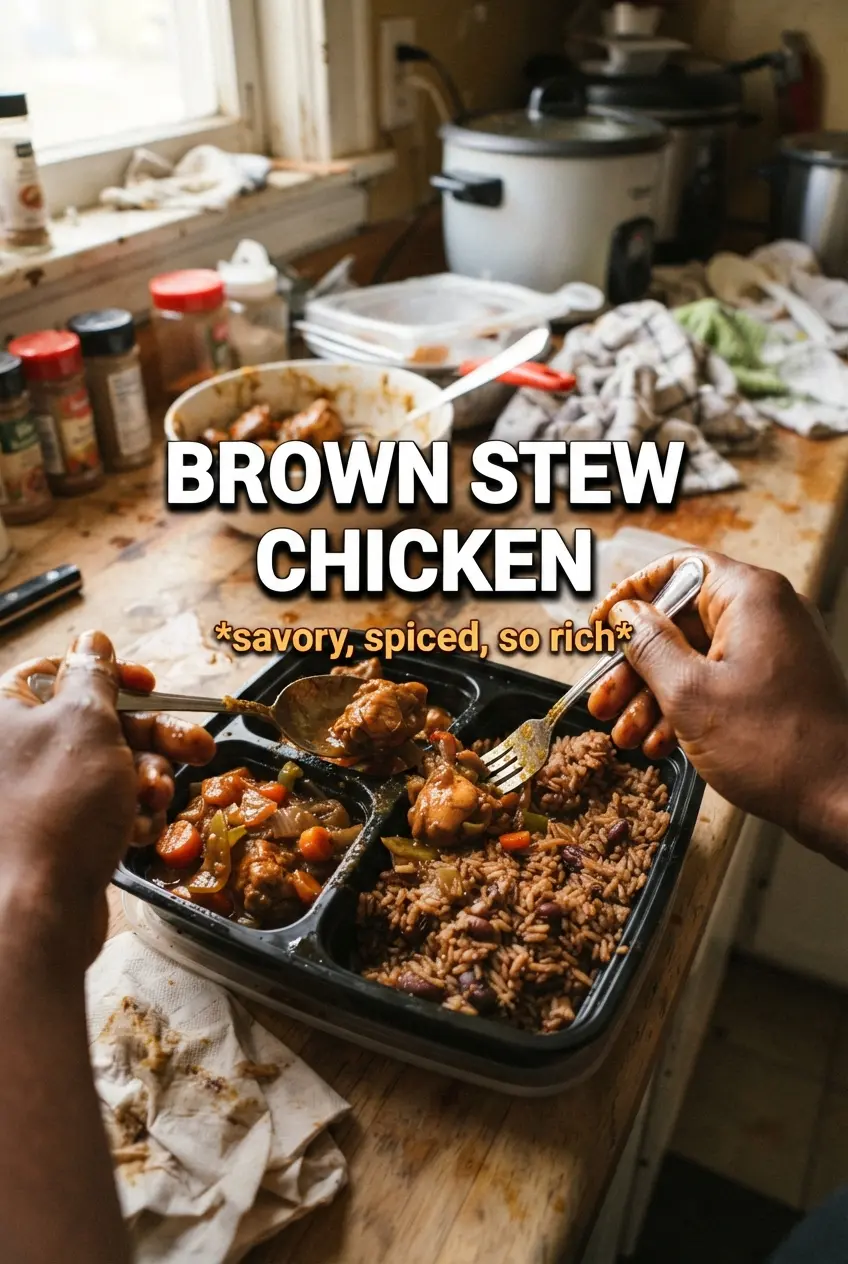
Brown stew chicken earns its place in the rotation because the gravy tastes deep and glossy without needing a long list of ingredients, and the chicken turns tender enough to pull apart with a fork while still holding onto its shape. The flavor starts with a proper marinade, then builds again when the sugar browns in the pan and the chicken takes on that dark, savory crust before the broth goes in. What you get at the end is not a thin broth with chicken floating in it. It’s a mahogany sauce that clings to the meat and settles beautifully over rice.
The two parts people rush are the marinade and the browning stage. The chicken needs time for the seasoning to work into the meat, and the sugar needs to reach a deep amber before the chicken goes in or you’ll miss that signature Jamaican-style color and taste. Once the liquid is added, the real trick is patience: low, steady simmering keeps the thighs juicy while the gravy reduces into something rich enough to spoon.
Below, I’ve included the part that matters most if you’ve ever ended up with pale chicken or a sauce that stayed watery. The steps are straightforward, but the order makes all the difference.
The gravy darkened up perfectly and coated the chicken instead of turning watery. I let it simmer the full 40 minutes and the thighs were fall-apart tender without losing their shape.
Like this brown stew chicken? Save it to Pinterest for the nights when you want deep Caribbean flavor, a rich gravy, and tender chicken over rice.
The Marinade Is What Gives the Gravy Its Depth
Brown stew chicken tastes flat when the seasoning only lives in the sauce. The chicken needs time with the browning sauce, thyme, garlic powder, onion powder, and all-purpose seasoning so the meat itself carries flavor all the way through. Two hours is the minimum if you’re in a hurry, but overnight gives you the best payoff because the salt seasons the meat all the way to the bone.
The browning sauce is doing more than coloring the chicken. It gives the finished gravy that dark, almost lacquered look that people expect from this dish. If your stew looks pale, the usual culprit is skipping the sugar caramel or letting the sauce simmer without enough color built in at the start.
- Chicken thighs and drumsticks — Bone-in pieces stay juicier through the long simmer and give the gravy more body. Boneless chicken works in a pinch, but it finishes faster and won’t taste quite as rich.
- Browning sauce — This is what gives the stew its deep color and a slightly bitter, caramel edge that plain soy sauce can’t copy. A little goes a long way, so use the amount in the marinade instead of pouring in more later.
- Scotch bonnet or habanero — This brings clean heat and that unmistakable Caribbean lift. If you want the flavor without a lot of fire, keep it whole or use half the amount minced very finely.
- Fresh thyme — Dried thyme works in the marinade, but fresh thyme on top at the end gives the stew a brighter finish. Don’t skip it if you want the dish to taste alive instead of just dark.
- Chicken broth — Use a broth with enough body to support the sauce. Water will work, but the stew ends up thinner and you lose some of the savory base that makes the gravy cling.
What Each Ingredient Is Actually Doing in This Recipe

- Primary ingredient (the star) — Quality matters most. Choose the best you can find.
- Cooking medium (oil, butter, or broth) — This carries flavors and prevents dryness.
- Seasonings (salt, pepper, spices, herbs) — Layer flavors so nothing overpowers. Build depth gradually.
- Aromatics (garlic, onion, herbs) — Cook with fat to bloom flavors. Become the foundation.
- Supporting ingredients — Complement the main ingredient without overpowering it.
- Sauce or liquid (if applicable) — Brings flavors together. Balance richness with acid.
- Acid (lemon, vinegar, wine, or other) — Brightens and prevents flat-tasting results.
- Final finish (garnish, glaze, or sauce) — Prevents one-dimensional taste and adds visual appeal.
How to Build the Dark Gravy Without Burning the Sugar
Caramelizing the Sugar First
Heat the oil, then add the sugar and let it melt into a deep amber caramel before the chicken goes in. You want it golden brown and fragrant, not black and bitter. The moment it turns too dark, the whole pot will taste harsh, so keep the heat steady and stay close.
Browning the Chicken in Stages
Lay the marinated chicken into the caramel oil and let it sit long enough to pick up color before turning. If you move it too early, the sugar can stick and tear instead of forming that deep crust. Brown it on several sides until you see a dark mahogany finish, then pull it out while you cook the vegetables.
Cooking Down the Aromatics
The onions, bell peppers, garlic, green onions, and scotch bonnet need a short sauté, just long enough to soften and lose their raw edge. Four minutes is usually enough. If the pan looks dry, the vegetables can catch on the caramel at the bottom, so stir and scrape gently while they soften.
Simmering Until the Sauce Clings
Once the chicken and broth go back in, bring it to a boil, then lower the heat and cover the pot. A gentle simmer gives the chicken time to turn tender without breaking apart too soon. Uncover at the end if the gravy needs to tighten, and stop when it coats the back of a spoon instead of running off like stock.
What to Change When You Need a Lighter or Faster Version
Use boneless thighs for a quicker weeknight pot
Boneless thighs shave time off the simmer and are easier to portion, but they don’t give the gravy quite the same richness as bone-in pieces. Cut the simmer back and check early so they stay tender instead of stringy.
Make it dairy-free and naturally gluten-free
This dish already works well for both as long as your seasoning blend and broth are gluten-free. The stew gets all its body from the browned chicken, vegetables, and reduction, so you don’t need flour or cream to thicken it.
Dial back the heat without losing the pepper flavor
Keep the scotch bonnet whole, then remove it after the vegetables cook if you want fragrance more than fire. You’ll still get that fruity pepper note in the background, but the stew won’t burn at the back of the throat.
Storage and Reheating
- Refrigerator: Keeps for 4 days in a sealed container. The gravy thickens as it sits, and the flavor gets even deeper by the next day.
- Freezer: Freezes well for up to 3 months. Cool it completely first and freeze with some gravy so the chicken doesn’t dry out when thawed.
- Reheating: Warm it gently on the stove over low heat with a splash of broth if needed. High heat can tighten the chicken and make the sauce break, especially once it has thickened in the fridge.
Questions I Get Asked About This Recipe
Brown Stew Chicken
Ingredients
Equipment
Method
- Combine browning sauce, all-purpose seasoning, garlic powder, onion powder, dried thyme, salt, and pepper with the chicken pieces, then rub to coat evenly. Marinate for at least 2 hours or overnight in the refrigerator, covered, so the flavors soak in deeply.
- Heat vegetable oil in a large skillet or Dutch oven over medium heat, then add the sugar and let it caramelize until golden brown. Stir occasionally and watch closely to avoid burning.
- Add the marinated chicken pieces to the caramel oil and cook until deeply golden on all sides, turning as needed. Remove the chicken to a plate once browned.
- In the same pot, sauté onion, bell peppers, garlic, green onions, and scotch bonnet for 4 minutes until aromatic and slightly softened. Keep the heat at medium so the vegetables cook without scorching.
- Return the browned chicken to the pot, add chicken broth, and bring everything to a boil. Scrape up any browned bits from the bottom for extra flavor.
- Reduce heat to low, cover, and simmer for 35-40 minutes until the chicken is fall-apart tender and the gravy is thick. Uncover for the last few minutes if you need to reduce to your preferred thickness.
- Ladle brown stew chicken into bowls and serve with rice, then top with fresh thyme. Garnish at the end for the brightest herbal aroma.