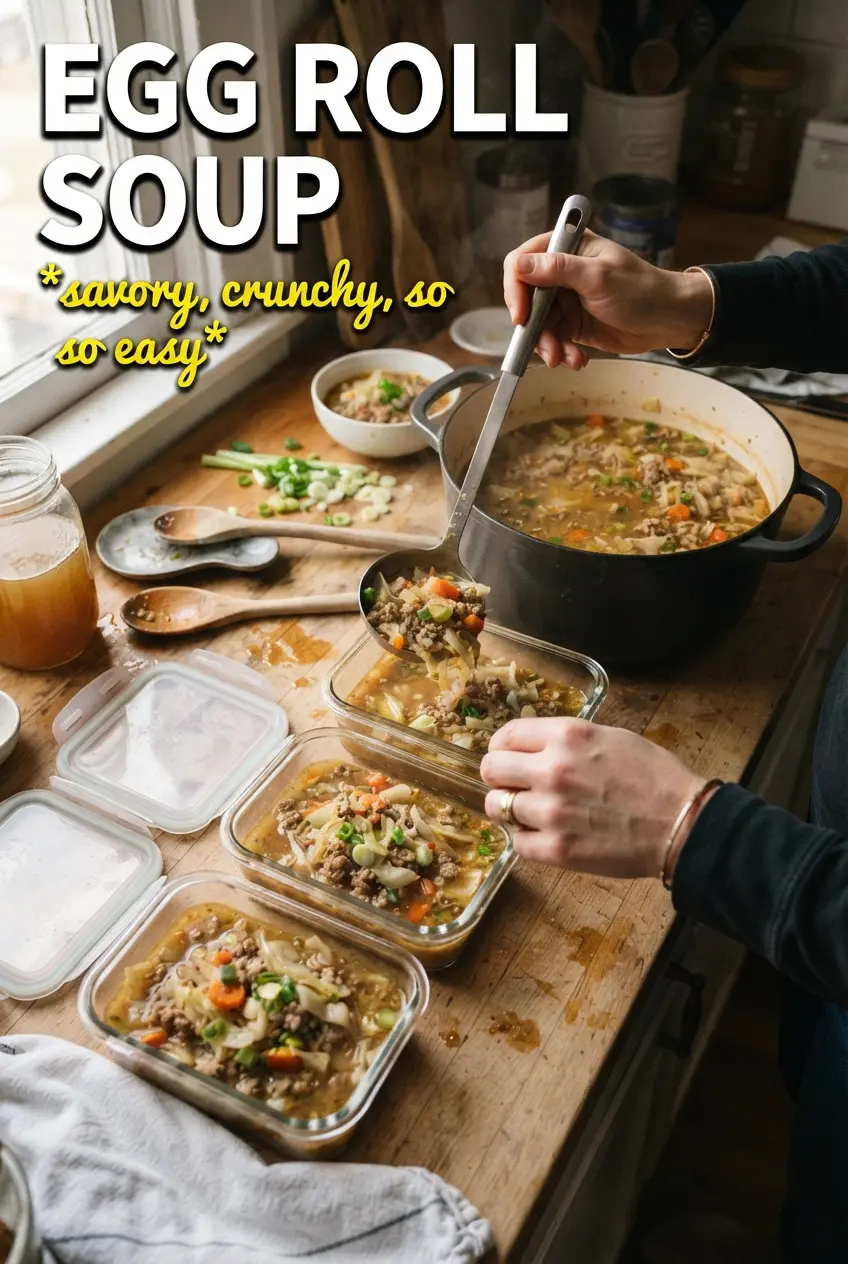
Egg roll soup gives you everything people love about the filling of a takeout egg roll, just in a bowl instead of wrapped and fried. The broth is savory and ginger-forward, the cabbage stays lightly tender instead of turning to mush, and the ground pork gives it that rich, satisfying edge that makes a simple soup feel complete. The crispy wonton strips on top seal the deal with the crunch you’d otherwise miss.
What makes this version work is the order of the ingredients. You brown the meat first so the pot starts with flavor, then you bloom the garlic and ginger briefly before adding the broth. That short step matters more than people think; it keeps the soup tasting layered instead of flat. The cabbage and carrots go in near the end so they soften without losing all texture.
Below, I’ve included the small details that matter most here: how long to simmer the vegetables, what to do if your broth tastes too salty, and the swaps that still keep the soup tasting like an egg roll in bowl form.
The ginger-soy broth had so much flavor, and the cabbage stayed tender but still had a little bite. I used the wonton strips on top like you suggested and my husband went back for a second bowl immediately.
Love this cozy bowl of egg roll soup? Save it to Pinterest for a fast dinner with savory broth, tender cabbage, and crispy wonton topping.
The Trick to Keeping the Broth Light, Not Greasy
Egg roll soup can go wrong fast if the meat is browned but the pot never gets deglazed. Those browned bits on the bottom are where a lot of the flavor lives, and the broth needs to lift them cleanly so the soup tastes seasoned all the way through. If you skip that layer, the soup can taste like salted water with cabbage in it.
Another common issue is overcooking the vegetables. Cabbage should be tender and silky at the edges, not collapsed and limp. Carrots need enough time to soften, but they should still hold their shape. That little bit of structure is what keeps the soup from feeling heavy.
- Ground pork or chicken — Pork gives you the richest, most classic takeout-style result, but ground chicken keeps the soup lighter. Either one works well because the broth carries the seasoning. If you use chicken, add a touch more sesame oil for depth.
- Cabbage — Thin shreds cook quickly and drink in the broth. Green cabbage is the best choice here because it softens without disappearing. Savoy works too, but it turns softer faster, so watch the simmer closely.
- Fresh ginger and garlic — These are not background players. They build the egg roll flavor from the start, and fresh really matters here. Jarred garlic or ginger paste will work in a pinch, but the soup loses some brightness.
- Sesame oil — Use toasted sesame oil for finishing flavor, not regular oil. It adds the nutty note that makes the broth taste familiar. A little goes a long way, so measure it instead of pouring freely.
- Crispy wonton strips — These are the closest thing to the crackly wrapper of a fried egg roll. Add them at the table, not into the pot, or they’ll soften right away. Crushed fried noodles or chow mein noodles can step in if that’s what you have.
What Each Ingredient Is Actually Doing in This Recipe

- Primary ingredient (the star) — Quality matters most. Choose the best you can find.
- Cooking medium (oil, butter, or broth) — This carries flavors and prevents dryness.
- Seasonings (salt, pepper, spices, herbs) — Layer flavors so nothing overpowers. Build depth gradually.
- Aromatics (garlic, onion, herbs) — Cook with fat to bloom flavors. Become the foundation.
- Supporting ingredients — Complement the main ingredient without overpowering it.
- Sauce or liquid (if applicable) — Brings flavors together. Balance richness with acid.
- Acid (lemon, vinegar, wine, or other) — Brightens and prevents flat-tasting results.
- Final finish (garnish, glaze, or sauce) — Prevents one-dimensional taste and adds visual appeal.
Building the Egg Roll Flavor in the Pot
Brown the Meat Until the Pan Starts Talking Back
Cook the pork or chicken over medium-high heat until it’s no longer pink and some of the edges pick up color. You want the meat broken into small pieces so it blends into the soup instead of sitting in big clumps. If there’s a lot of fat in the pot, drain the excess, but leave a little behind because it helps carry the aromatics. A dry, pale base is the fastest way to end up with a thin-tasting soup.
Wake Up the Garlic and Ginger Briefly
Add the garlic and ginger to the hot pot and stir for just 1 to 2 minutes, until they smell fragrant. They should sizzle, not scorch. If the heat is too high, garlic turns bitter fast, and that bitterness will carry through the whole broth. Once they smell warm and sharp, stop there and move on.
Let the Broth Simmer the Vegetables, Not the Other Way Around
Pour in the broth, soy sauce, sesame oil, rice vinegar, and sriracha, then bring the pot to a boil before adding the cabbage and carrots. Simmer until the vegetables are tender, about 8 to 10 minutes. The broth should taste savory with a little tang and heat, not harsh or overly salty. If it tastes flat at the end, a small splash more rice vinegar wakes it up faster than extra soy sauce.
Finish With Freshness and Crunch
Stir in the green onions after the vegetables are done so they stay bright instead of murky. Taste the soup before serving and adjust with salt and pepper only if it needs it. Ladle it hot into bowls and top each one with wonton strips and sesame seeds right before eating. That last step matters because the crunch disappears quickly once it hits the broth.
How to Adapt This Without Losing the Egg Roll Feel
Make It with Chicken Instead of Pork
Ground chicken gives you a lighter bowl with a cleaner finish. It won’t bring quite the same richness as pork, so keep the sesame oil and ginger in play. If the broth tastes a little lean, an extra pinch of salt and another small splash of soy sauce help bring it back into balance.
Gluten-Free Without Losing the Crunch
Use a gluten-free soy sauce or tamari and skip the standard wonton strips. Crispy rice noodles or gluten-free crunchy toppings work better here than soft crackers because they keep that contrast against the broth. The soup itself still tastes complete because the seasoning lives in the broth, not the garnish.
Vegetarian Egg Roll Soup
Swap the meat for finely chopped mushrooms and use vegetable broth instead of chicken broth. Mushrooms give you a deeper, savory base that stands in for the meatiness you’d otherwise miss. Add them early and cook off their moisture so the soup doesn’t turn watery.
Storage and Reheating
- Refrigerator: Store the soup for up to 4 days. The cabbage softens a bit more each day, but the flavor holds up well.
- Freezer: It freezes well without the wonton strips. Cool it completely, freeze in airtight containers, and leave the garnish off until serving.
- Reheating: Warm it gently on the stove over medium-low heat until hot. Don’t boil it hard, or the cabbage can turn dull and overcooked. Add fresh crispy toppings only after reheating.
Answers to the Questions Worth Asking
Egg Roll Soup
Ingredients
Equipment
Method
- Heat a large pot over medium-high heat and add the vegetable oil, then add the ground pork and break it up as it browns. Continue until cooked through, then drain excess fat.
- Add the minced garlic and grated ginger to the pot and cook for 1-2 minutes until fragrant, stirring as needed.
- Pour in the chicken broth, soy sauce, sesame oil, rice vinegar, and sriracha, then bring the mixture to a boil.
- Add the shredded cabbage and carrots to the boiling broth. Simmer for 8-10 minutes until the vegetables are tender.
- Stir in the sliced green onions and season with salt and pepper to taste. Cook for 1 minute just to warm through.
- Ladle the soup into bowls and top with crispy wonton strips, sesame seeds, and extra green onions. Serve right away for the best crunch.