Ingredients
Equipment
Method
Make the soy-miso broth
- Bring the chicken broth to a simmer in a Dutch oven, whisking to ensure it heats evenly. Visual cue: small bubbles should form around the edges and surface.
- Whisk in the white miso paste, soy sauce, mirin, and sesame oil until fully dissolved. Visual cue: the broth turns slightly darker and smooth with no miso lumps.
Cook the dumplings and bok choy
- Add the frozen dumplings to the simmering broth and cook for 5-7 minutes, until cooked through. Visual cue: dumplings look plump and feel hot throughout.
- Add the halved bok choy and cook for 2-3 minutes, until wilted. Visual cue: bright green leaves soften but keep some bite.
Cook the ramen noodles
- Cook the fresh ramen noodles separately according to package instructions, then drain. Visual cue: noodles are tender and springy, not mushy.
Assemble the bowls
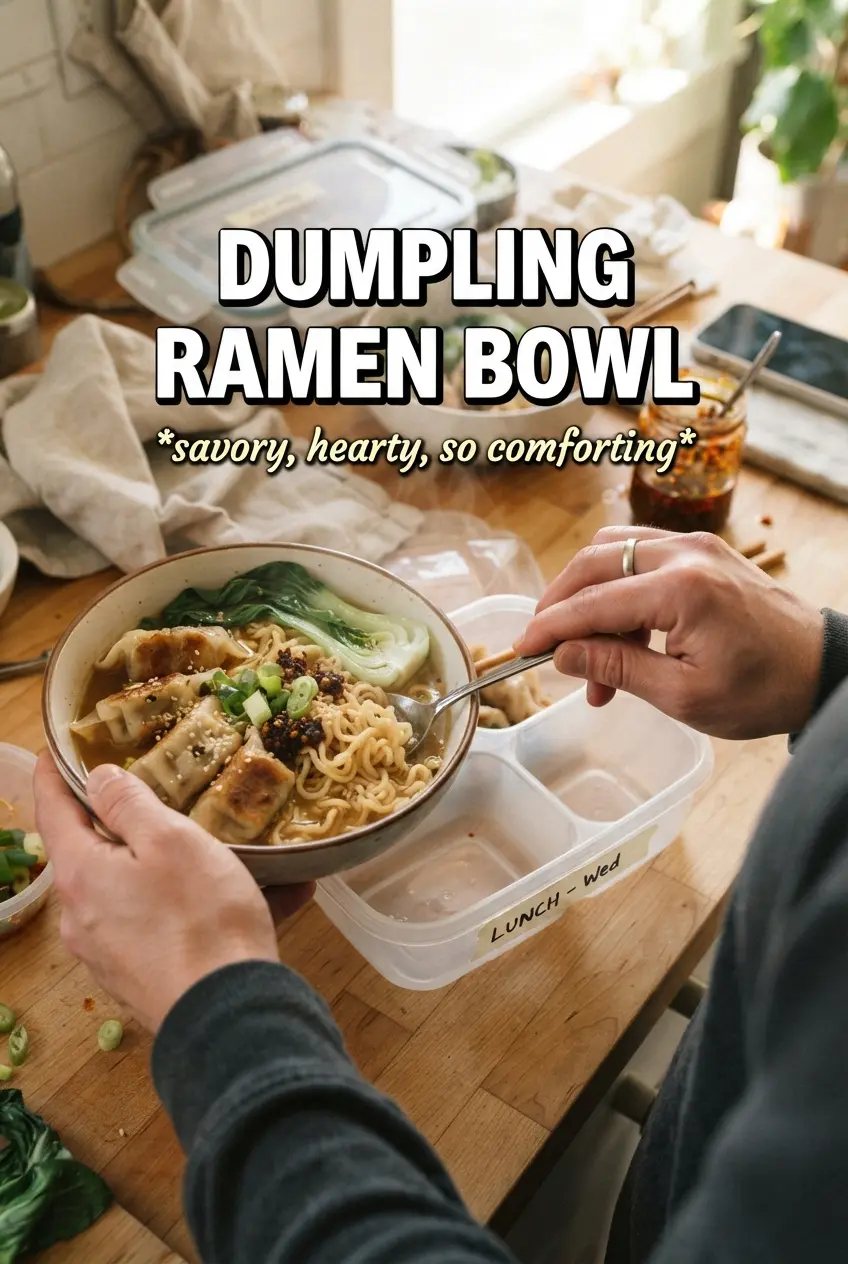
- Divide the drained ramen noodles between 4 bowls and ladle the dumplings and soy-miso broth over top. Visual cue: broth pools around the noodles and coats dumplings.
- Top each bowl with halved soft-boiled eggs, corn kernels, sliced green onions, nori, sesame seeds, and chili oil. Visual cue: a mix of runny yolk, green flecks, and dark nori contrast against the broth.
Notes
Pro tip: keep the broth at a gentle simmer while adding miso so it dissolves smoothly; taste and add salt only after the dumplings and bok choy are in. Store leftovers in the fridge up to 3 days (keep noodles separate if possible); freeze dumplings and broth without noodles for up to 2 months, then reheat and add freshly cooked noodles. For a lighter option, use reduced-sodium soy sauce and swap to chicken broth with lower sodium.