Chicken noodle soup made with homemade broth has a depth you can taste right away. The broth comes out golden, rich, and clean-tasting, with noodles that stay tender and chicken that still tastes like chicken, not just an add-in. It’s the kind of bowl that feels simple at first glance, then keeps getting better with every spoonful.
The broth is what changes everything here. Chicken backs, necks, or a whole chicken simmer slowly with onion, carrot, celery, garlic, bay leaves, and a little apple cider vinegar, which helps pull more body from the bones. The result is a broth with a fuller mouthfeel and better color than anything from a carton. Once that base is strained, the fresh vegetables cook right in the broth so they stay bright, and the noodles go in near the end so they don’t turn bloated and dull.
Below, I’ll walk through the one step people rush most often, plus the small decisions that keep the soup clear, savory, and balanced. If you’ve ever had homemade chicken noodle soup come out flat or cloudy, this version fixes both problems.
The broth came out so rich and golden, and the noodles stayed just right even after reheating. I used a whole chicken and the soup had that old-school homemade taste my kids kept going back for.
Save this chicken noodle soup for the day you want a deeply golden broth, tender noodles, and that from-scratch comfort you can taste in the first spoonful.
The Broth Is the Whole Point Here
With chicken noodle soup, the biggest mistake is treating the broth like background noise. If the base tastes thin, the whole pot tastes thin no matter how many carrots or noodles you add. This version starts with chicken pieces that bring bones, collagen, and flavor, then simmers them long enough to give the broth body without pushing it into cloudy, stale territory.
The apple cider vinegar matters more than it sounds like it should. It doesn’t make the soup taste acidic; it just helps coax more richness from the bones during the long simmer. Skimming the foam early also keeps the broth cleaner. That’s the difference between a broth that looks muddy and one that turns bright gold in the pot.
- Chicken pieces — Backs, necks, or a whole chicken all work, but the bony pieces give the most flavor for the least cost. If you use a whole chicken, pull off any usable meat after simmering and save it for the soup.
- Apple cider vinegar — You won’t taste it in the finished soup, but it helps the broth develop more body. Don’t skip it if you want that fuller, homemade texture.
- Bay leaves — They add a quiet, savory backbone that keeps the broth from tasting flat. Two leaves is enough; more starts to dominate.
- Wide egg noodles — These are sturdy enough to hold up in broth without dissolving. If you swap in thinner noodles, cut the cook time and serve right away or they’ll soften too much.
What Each Ingredient Is Actually Doing in This Recipe

- Primary ingredient (the star) — Quality matters most. Choose the best you can find.
- Cooking medium (oil, butter, or broth) — This carries flavors and prevents dryness.
- Seasonings (salt, pepper, spices, herbs) — Layer flavors so nothing overpowers. Build depth gradually.
- Aromatics (garlic, onion, herbs) — Cook with fat to bloom flavors. Become the foundation.
- Supporting ingredients — Complement the main ingredient without overpowering it.
- Sauce or liquid (if applicable) — Brings flavors together. Balance richness with acid.
- Acid (lemon, vinegar, wine, or other) — Brightens and prevents flat-tasting results.
- Final finish (garnish, glaze, or sauce) — Prevents one-dimensional taste and adds visual appeal.
Building the Soup in the Right Order
Making the Broth First
Put all the broth ingredients in a large pot, cover with cold water, and bring it up to a boil before lowering the heat. Once it starts bubbling, skim off the foam that rises in the first few minutes. That foam is what can make the broth taste harsh or look cloudy, and taking it off early gives you a cleaner result. Keep the simmer gentle; a hard boil will make the broth look ragged and can turn the chicken meat stringy before it’s ready.
Straining and Seasoning the Base
When the broth has simmered long enough, strain it and season it with salt while it’s still hot. Hot broth shows you its true flavor better than cold broth does, so this is the moment to build the taste. If the broth seems underseasoned, don’t overcorrect in one heavy dump of salt. Add a little, stir, taste, and let it sit for a minute before deciding if it needs more.
Cooking the Vegetables and Noodles
Bring the strained broth back to a simmer before adding the fresh carrots, celery, and onion. They need that head start so they soften without going mushy. Add the egg noodles only after the vegetables have cooked for about 10 minutes, and watch them closely near the end. The noodles should be tender but still hold their shape; if they cook too long, they swell and soak up more broth than they should.
Finishing with Chicken and Herbs
Stir the shredded chicken back in near the end, just long enough to warm it through. That keeps the meat from drying out or turning fibrous. Add the parsley last so it stays bright and fresh instead of fading into the broth. Taste again before serving, because chicken noodle soup almost always needs one final pinch of salt and pepper to wake everything up.
What to Change When You Need to Work With What You’ve Got
Use a Whole Chicken for a Meatier Soup
A whole chicken gives you both broth and enough meat to make the soup feel generous. Pull the meat from the bones after simmering, then shred it and return it to the pot. The broth won’t be quite as intensely collagen-rich as one made with backs and necks alone, but it’s still full-bodied and practical.
Make It Gluten-Free With the Right Noodle Swap
Use a gluten-free noodle that’s built for soup, not a delicate pasta that falls apart in broth. Cook it separately if the package directions suggest a very short cook time, then add it to each bowl before ladling in the soup. That keeps the broth from turning starchy and helps the noodles stay intact.
Stretch It Further for a Bigger Crowd
If you need more servings, add extra broth, another onion, and another handful of noodles rather than just diluting the pot with water. Water thins the flavor in a way that’s hard to recover from. Extra broth or stock keeps the soup tasting like itself while giving you more volume.
Storage and Reheating
- Refrigerator: Store in a covered container for up to 4 days. The noodles will keep soaking up broth, so the soup gets thicker by day two.
- Freezer: Freeze the broth and chicken without the noodles for the best texture. Noodles turn soft and swollen after freezing, so cook a fresh batch when you reheat.
- Reheating: Warm gently over medium-low heat until steaming, not boiling. If it looks too thick, add a splash of broth or water before heating; boiling hard can break the noodles and pull the chicken apart.
Answers to the Questions Worth Asking
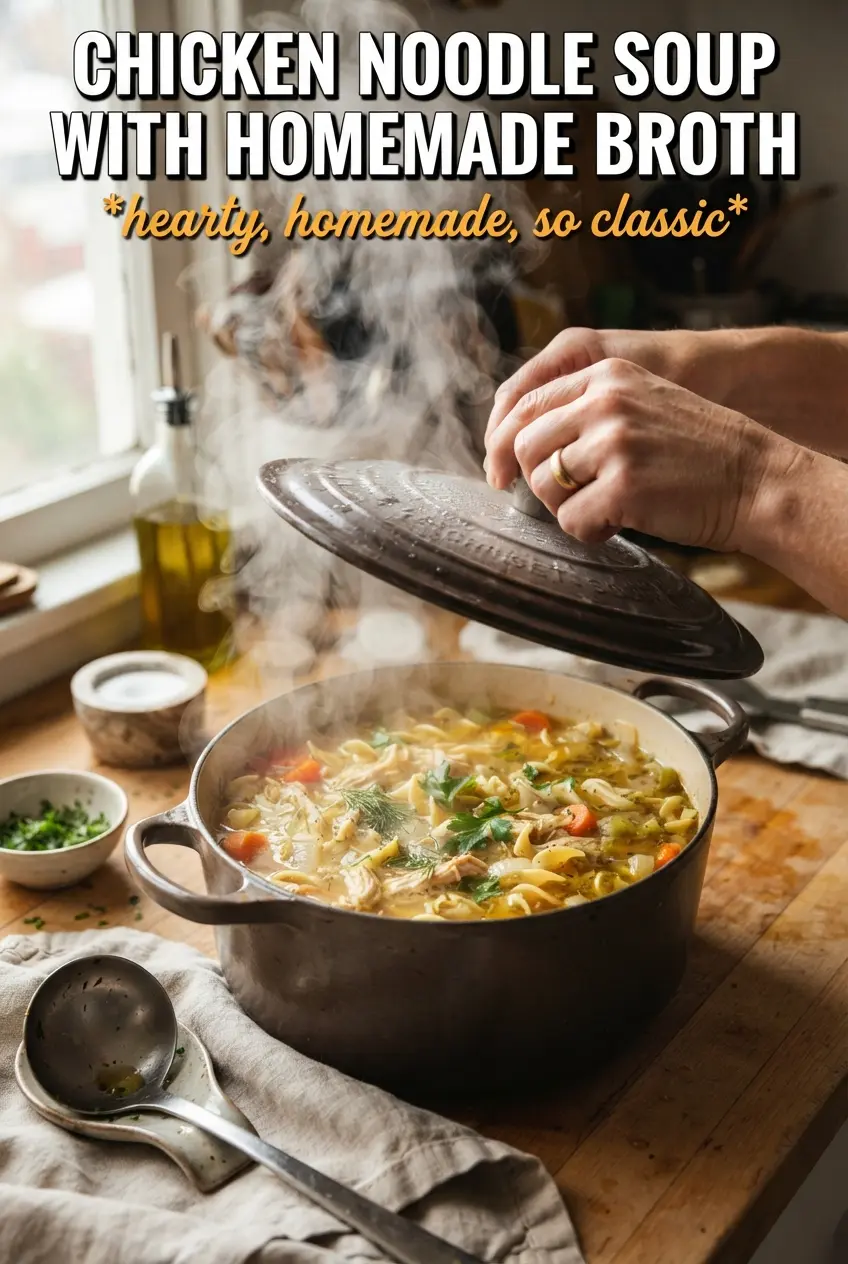
Chicken Noodle Soup With Homemade Broth
Ingredients
Equipment
Method
- Combine chicken pieces, carrots, celery stalks, onion, garlic head, bay leaves, apple cider vinegar, and cold water in a large pot and bring to a boil over high heat.
- Skim foam from the surface as needed, then reduce the heat and keep the broth at a gentle simmer.
- Simmer for 1.5-2 hours, maintaining a steady, low bubble, until the broth looks deeply golden and tastes rich.
- Strain the broth into the same pot or a clean pot and season with salt, reserving any shredded chicken from the broth bones.
- Bring the strained broth to a simmer, then add fresh sliced carrots, sliced celery stalks, and diced onion.
- Simmer for 10 minutes, letting the vegetables soften slightly before adding noodles.
- Add wide egg noodles and cook for 6-8 minutes, stirring occasionally until tender.
- Stir in shredded chicken and fresh parsley, then season generously with salt and black pepper to taste.