Vegetable beef soup earns its place in the rotation when the broth turns deep and savory, the beef goes spoon-tender, and the vegetables still taste like themselves instead of collapsing into mush. The best bowls have that balance: rich mahogany broth, soft potato cubes that hold their shape, and just enough sweetness from corn and carrots to round out the beefy base.
What makes this version work is the order. Browning the beef first builds flavor before any liquid goes in, and cooking the tomato paste with the vegetables gives the broth a deeper, fuller taste instead of a raw tomato edge. Adding the potatoes later keeps them from breaking apart, while the green beans and corn go in near the end so they stay bright and textured.
Below, I’ll walk through the little decisions that matter here, from searing in batches to the timing on the vegetables. That’s what keeps this soup hearty instead of muddy.
The broth had such a deep, beefy flavor, and the potatoes stayed intact instead of turning to mash. I followed the timing exactly and the green beans still had a little bite, which my husband noticed right away.
Save this Vegetable Beef Soup for a hearty bowl with tender beef, soft potatoes, and vegetables that keep their texture.
The Sear That Gives the Broth Its Depth
If the beef goes straight into the liquid, the broth tastes flat no matter how long you simmer it. Browning the meat in batches gives you those dark browned bits on the bottom of the pot, and that fond is what turns the broth from basic to deep and savory. Crowding the pan is the main mistake here; it steams the beef and you lose the color that carries the flavor.
The same idea applies to the vegetables at the start. Onions, carrots, and celery need a few minutes in the fat to soften and pick up the flavor left behind by the beef. Tomato paste should cook for a minute or two until it darkens slightly, because that step takes away the raw edge and gives the soup more body.
What Each Ingredient Is Actually Doing in This Soup
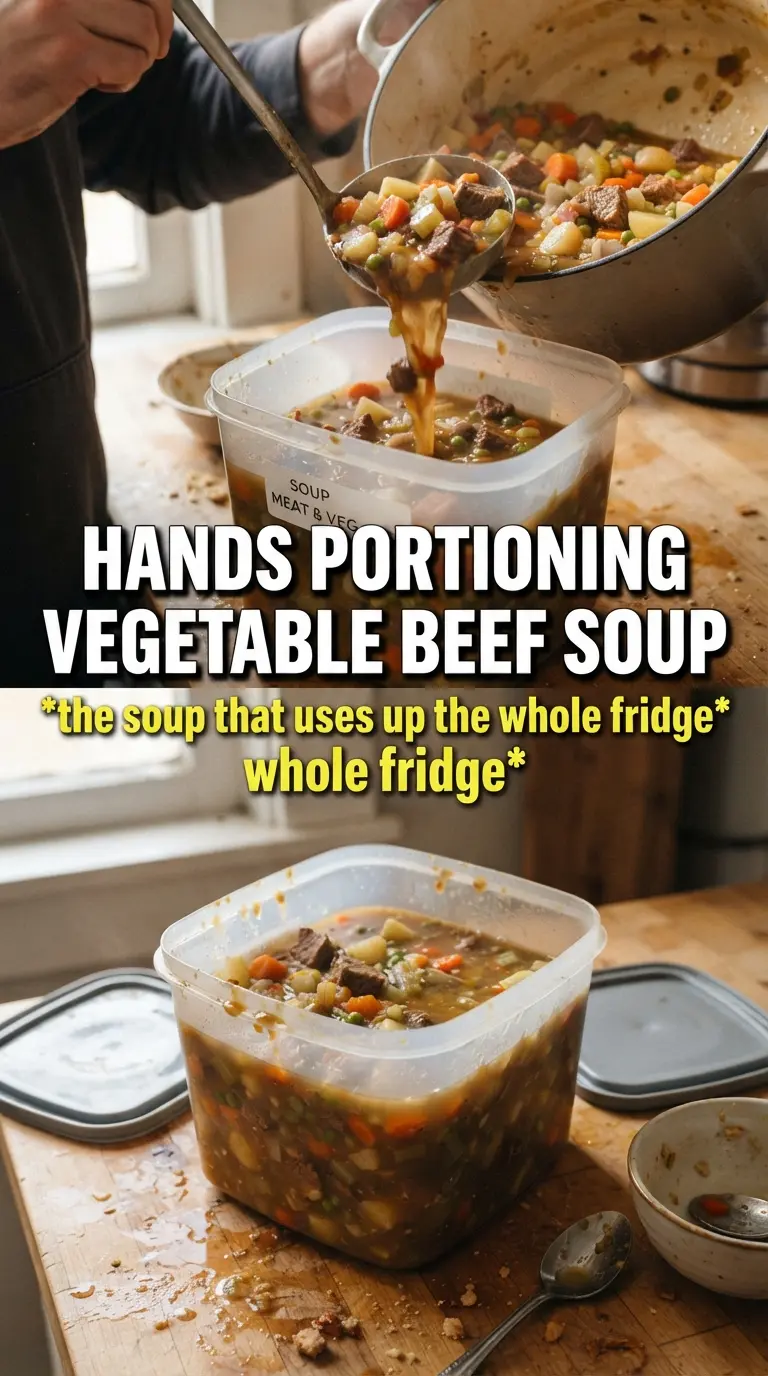
- Beef stew meat — This is the backbone of the soup. Chuck or stew meat needs time to soften, so cut it into even pieces and brown it well before simmering. If your stew meat is a little tough after the first simmer, it just needs more time; it usually gets better, not worse.
- Tomato paste and diced tomatoes — The paste deepens the broth, while the diced tomatoes add a little brightness and body. Cooking the paste with the aromatics is worth the extra minute because it removes the sharp canned taste.
- Potatoes — These turn the soup from brothy to substantial. Waxy or all-purpose potatoes hold their shape better than very starchy ones, and cutting them into similar-sized cubes helps them finish at the same time.
- Green beans and corn — These go in near the end so they stay lively. Frozen corn works just as well as fresh here, and there’s no need to thaw it first.
- Worcestershire sauce and thyme — Worcestershire adds a savory backbone that plain broth can’t give you, and thyme ties everything together without taking over. If you don’t have Worcestershire, a splash of soy sauce can cover some of that same umami depth, though the flavor will be a little different.
Building the Soup in the Right Order
Brown the Beef First
Heat the oil in a large Dutch oven until it shimmers, then sear the beef in batches until it has a deep brown crust on several sides. You are not cooking it through here; you’re building flavor. If the pot looks crowded or wet, pull some pieces out and finish in smaller batches so the meat browns instead of steams.
Cook the Aromatics and Tomato Paste
Once the beef is out, add the onion, carrots, and celery and cook until the onion starts to turn translucent and the vegetables pick up some color from the pan. Stir in the garlic and tomato paste and cook for about 2 minutes, just until the paste darkens and smells richer. If the garlic goes in too early, it can burn before the paste has a chance to develop.
Simmer Until the Beef Turns Tender
Return the beef to the pot with the broth, diced tomatoes, Worcestershire, thyme, and bay leaf. Bring it up to a boil, then drop it to a steady simmer; you want gentle bubbles, not a hard boil that tightens the meat. After about 30 minutes, the beef should be starting to relax, but not yet fully tender.
Add the Potatoes, Then the Quick-Cooking Vegetables
Stir in the potatoes and cook until they’re just tender when pierced with a fork, then add the green beans and corn for the final 8 minutes. That timing keeps the potatoes from dissolving and lets the beans stay a little snappy. Pull the bay leaf before serving, then taste and season with salt and pepper at the end so you don’t oversalt the broth as it reduces.
Three Ways to Adapt It Without Losing the Soul of the Soup
Use frozen vegetables for a faster version
Frozen green beans and corn work well here and save a little prep time. Add them straight from the freezer near the end so they heat through without turning soft. The texture is a touch softer than fresh, but the soup still holds up beautifully.
Make it gluten-free without changing the method
This soup is naturally gluten-free as written as long as your beef broth and Worcestershire sauce are certified gluten-free. That check matters because those two ingredients are the ones most likely to hide gluten. The rest of the recipe stays exactly the same.
Stretch it for a bigger crowd
You can add another potato or a little extra broth if you need more servings, but don’t overdo the liquid or the soup starts to taste thin. The safest way to scale it up is to keep the same ratio of beef to broth and increase the vegetables by a modest amount. A wider pot helps because the meat still needs room to brown.
How to handle leftovers
The broth gets even better after a night in the fridge, but the potatoes will soften a little as they sit. If you know you want leftovers, cook the potatoes just until tender and reheat gently so they don’t fall apart. The soup thickens as it chills, so a splash of broth fixes it fast.
Storage and Reheating
- Refrigerator: Store in an airtight container for up to 4 days. The potatoes will soften a bit, and the broth may thicken as it sits.
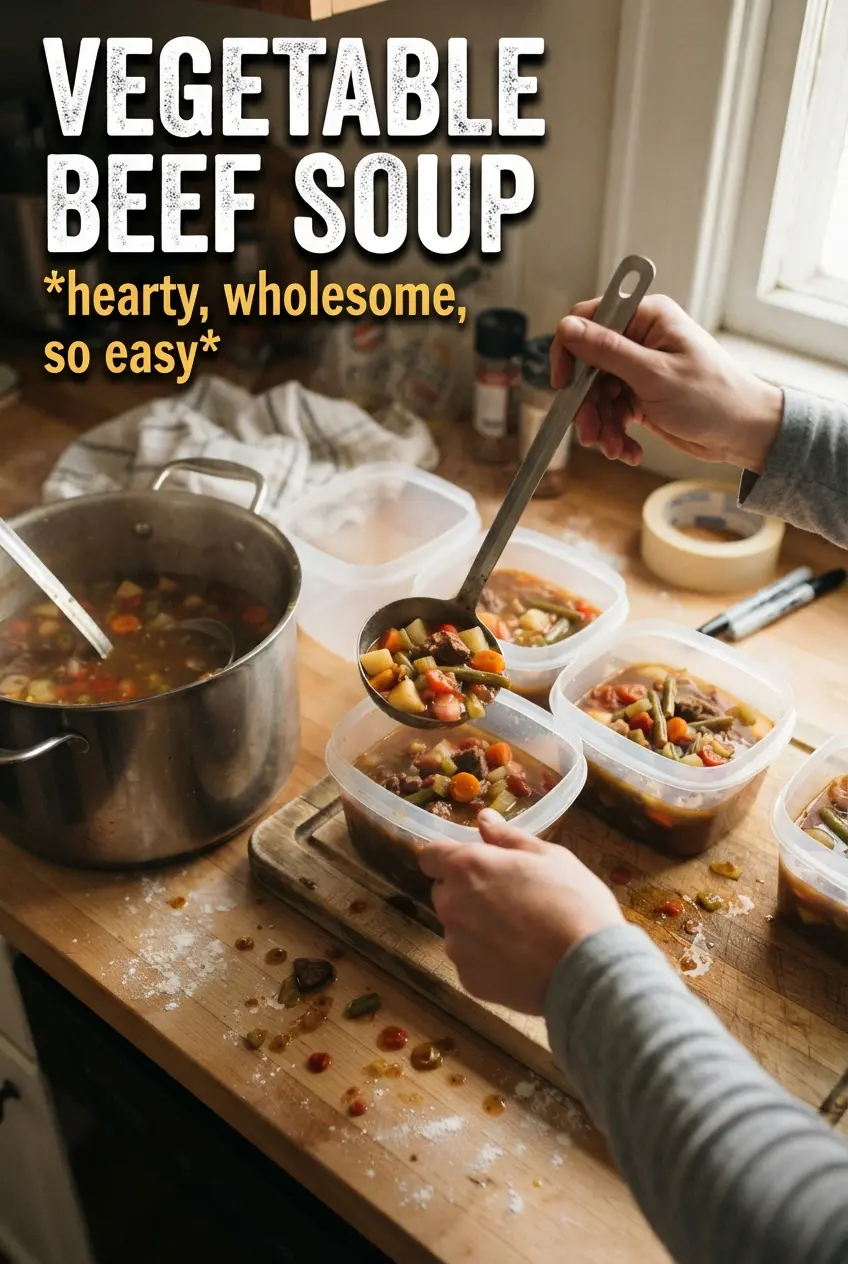
- Freezer: It freezes well for up to 3 months, though the potatoes can turn slightly grainy after thawing. For the best texture, cool completely and freeze in portions.
- Reheating: Warm it gently on the stove over medium-low heat until hot. A hard boil can break down the potatoes and make the beef seem dry, so keep the heat low and add a splash of broth if it looks too thick.
Answers to the Questions Worth Asking
Vegetable Beef Soup
Ingredients
Equipment
Method
- Heat the olive oil in a large Dutch oven over medium-high heat, then sear the beef in batches until browned on all sides, about 3 to 5 minutes per batch. Remove browned beef to a plate.
- Sauté the onion, carrots, and celery in the Dutch oven for 5 minutes, stirring occasionally. Add the garlic and tomato paste, then cook for 2 minutes until fragrant.
- Return the beef to the pot, then add the beef broth, diced tomatoes, Worcestershire sauce, dried thyme, and bay leaf. Bring everything to a boil, then reduce heat to low and simmer for 30 minutes.
- Add the potatoes and simmer for 15 minutes, until the potatoes are tender but not falling apart. Stir in the green beans and corn, then cook for the last 8 minutes.
- Remove the bay leaf and season with salt and pepper to taste. Taste the broth and adjust seasoning as needed, then serve hot.