Silky coconut broth, tender chicken, and slippery rice noodles make this Thai chicken noodle soup the kind of bowl that disappears fast. It’s rich without being heavy, bright without turning sharp, and the red curry paste gives the broth a warm, fragrant backbone that tastes like it simmered far longer than it did.
The trick is building the flavor in layers instead of dumping everything in at once. Curry paste needs a minute in the hot oil to bloom, garlic and ginger need just enough heat to lose their raw edge, and the coconut milk goes in with the broth so the soup stays smooth instead of greasy. Fish sauce, lime, and a little brown sugar do the balancing act at the end: salty, tangy, and just barely sweet.
Below, I’ve included the small details that keep the noodles from turning mushy and the broth from tasting flat. If you’ve ever had a coconut curry soup that felt one-note, this version fixes that.
The curry paste bloomed in the oil and the broth turned this gorgeous golden color right away. I added the noodles at the very end like you said, and they stayed springy instead of getting bloated.
Pin this Thai Chicken Noodle Soup for a creamy coconut broth, bright lime finish, and rice noodles that stay perfectly springy.
The Reason the Curry Paste Has to Hit the Oil First
If you stir curry paste straight into liquid, it tastes thinner and flatter. Blooming it in oil wakes up the dried spices and chile oils inside the paste, and that short minute changes the whole soup. You’ll smell the difference before you see it: the paste goes from raw and a little harsh to warm, fragrant, and rounded.
This is also why the aromatics go in after the paste. Garlic and ginger only need a brief cook, just long enough to lose their raw bite. If they go in too early, they can scorch while the paste is still opening up. The goal is a base that tastes layered, not muddy.
- Red curry paste — This is the backbone of the soup, so use one you trust. Some brands are saltier and hotter than others; if yours runs aggressive, start with a little less and build up after the broth simmers.
- Coconut milk — Full-fat coconut milk gives the broth its body and keeps it from tasting watery. Light coconut milk works in a pinch, but the soup will be thinner and less rounded.
- Lemongrass and galangal — These bring the Thai-style aroma that ginger alone can’t fully copy. If you can’t find galangal, fresh ginger is the best substitute, and bruised lemongrass is worth seeking out because it perfumes the broth without turning stringy.
- Rice noodles — Soak them separately and add them at the end. Cooking them in the soup from the start is the fastest way to get broken noodles and a broth that turns starchy.
What Each Ingredient Is Actually Doing in This Recipe
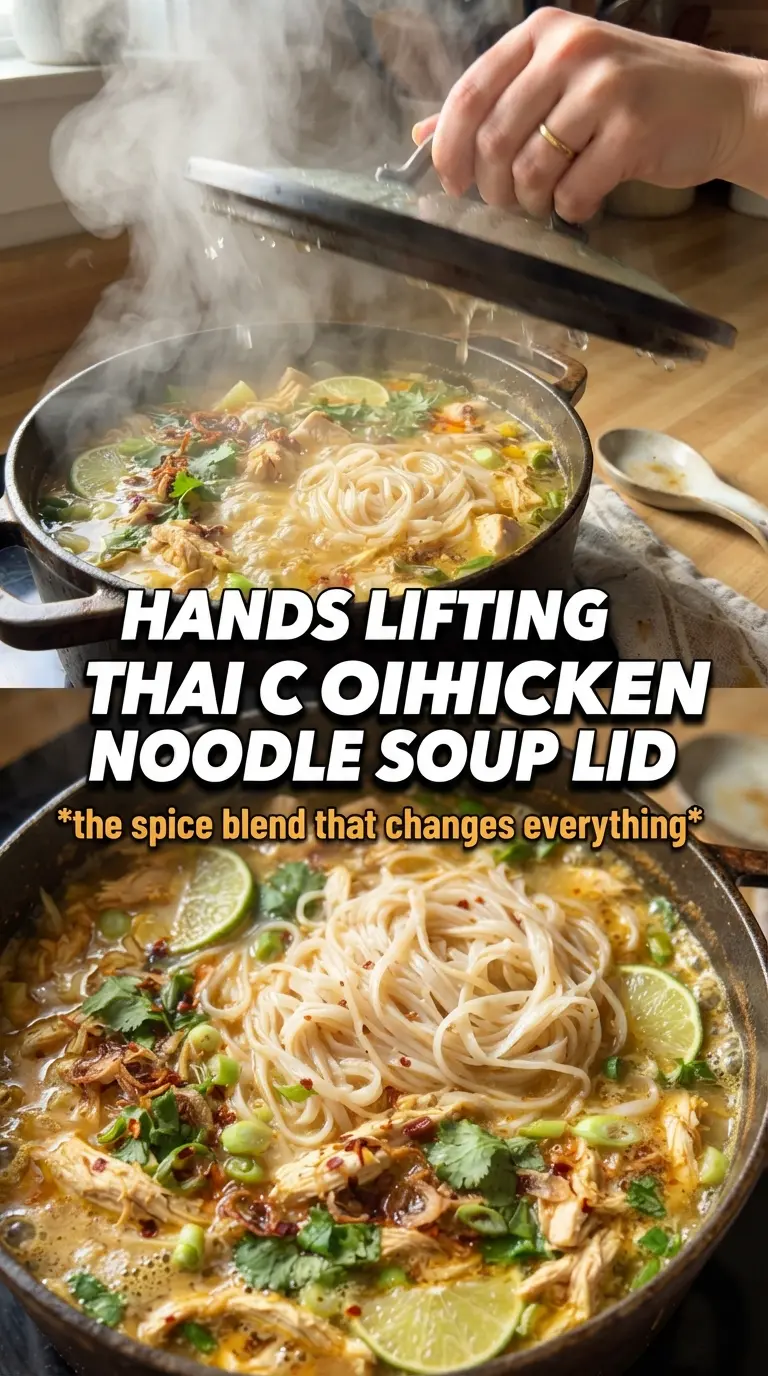
- Primary ingredient (the star) — Quality matters most. Choose the best you can find.
- Cooking medium (oil, butter, or broth) — This carries flavors and prevents dryness.
- Seasonings (salt, pepper, spices, herbs) — Layer flavors so nothing overpowers. Build depth gradually.
- Aromatics (garlic, onion, herbs) — Cook with fat to bloom flavors. Become the foundation.
- Supporting ingredients — Complement the main ingredient without overpowering it.
- Sauce or liquid (if applicable) — Brings flavors together. Balance richness with acid.
- Acid (lemon, vinegar, wine, or other) — Brightens and prevents flat-tasting results.
- Final finish (garnish, glaze, or sauce) — Prevents one-dimensional taste and adds visual appeal.
Building the Broth Without Turning the Noodles to Mush
Soak the noodles before the pot ever goes on the stove
Rice noodles need a head start in warm water so they soften evenly before they touch the broth. Drain them well and keep them aside; if they sit in water too long, they go gummy and cling together. Under-soaked noodles will finish in the soup, but they should already be flexible, not rigid.
Cook the aromatics until the kitchen smells sharp and fragrant
Warm the oil, then cook the curry paste first until it looks darker and a little shiny around the edges. Add the garlic, bruised lemongrass, and galangal or ginger next, and stir just until the raw edge is gone. If the garlic starts to brown hard, the heat is too high and the broth will pick up bitterness.
Simmer the chicken gently
Pour in the coconut milk and broth, then add the fish sauce, lime juice, and brown sugar before the chicken goes in. The broth should come up to a gentle simmer, not a hard boil, when the sliced chicken is added. Thin slices cook fast; if the soup boils aggressively, the meat tightens and the coconut can separate a little at the surface.
Finish with the noodles at the end
Once the chicken is cooked through, pull out the lemongrass and galangal pieces and add the drained noodles. They only need a couple of minutes to heat through. Serve the soup right away with bean sprouts, herbs, lime wedges, and chili so the toppings stay crisp and bright against the warm broth.
How to Adjust the Soup for Different Kitchens and Diets
Make It Dairy-Free Without Losing Richness
This soup is already naturally dairy-free as written, which is part of why it tastes so lush without needing cream. Stick with full-fat coconut milk for the best body, because that’s what gives the broth its smooth, velvety finish.
Swap the Chicken Thighs for Breasts
Both work, but thighs stay juicier if the soup sits a few minutes before serving. Chicken breast is leaner and still turns out tender here because it’s sliced thin and cooked gently in broth, so use whichever you prefer and keep the simmer soft.
Gluten-Free and Still Full of Flavor
Rice noodles keep this dish naturally gluten-free, but check your curry paste and fish sauce labels since some brands sneak wheat into the mix. If you’re serving someone sensitive to gluten, that label check matters more than the noodle choice.
Turn It Into a Vegetarian Coconut Curry Soup
Replace the chicken broth with vegetable broth and swap the fish sauce for soy sauce or tamari. Add mushrooms, tofu, or both, but brown the mushrooms first so they don’t disappear into the broth. You’ll lose a little of the seafood depth from fish sauce, but the lime and curry still carry the dish.
Storage and Reheating
- Refrigerator: Store the soup for up to 4 days. The noodles keep soaking up broth, so it gets thicker as it sits.
- Freezer: Freeze the broth and chicken without the noodles for the best texture. Noodles turn soft and fragile after thawing, so add fresh soaked noodles when you reheat.
- Reheating: Warm it gently on the stove over medium-low heat until steaming. If it boils hard, the chicken tightens and the coconut milk can separate a bit.
Questions I Get Asked About This Recipe
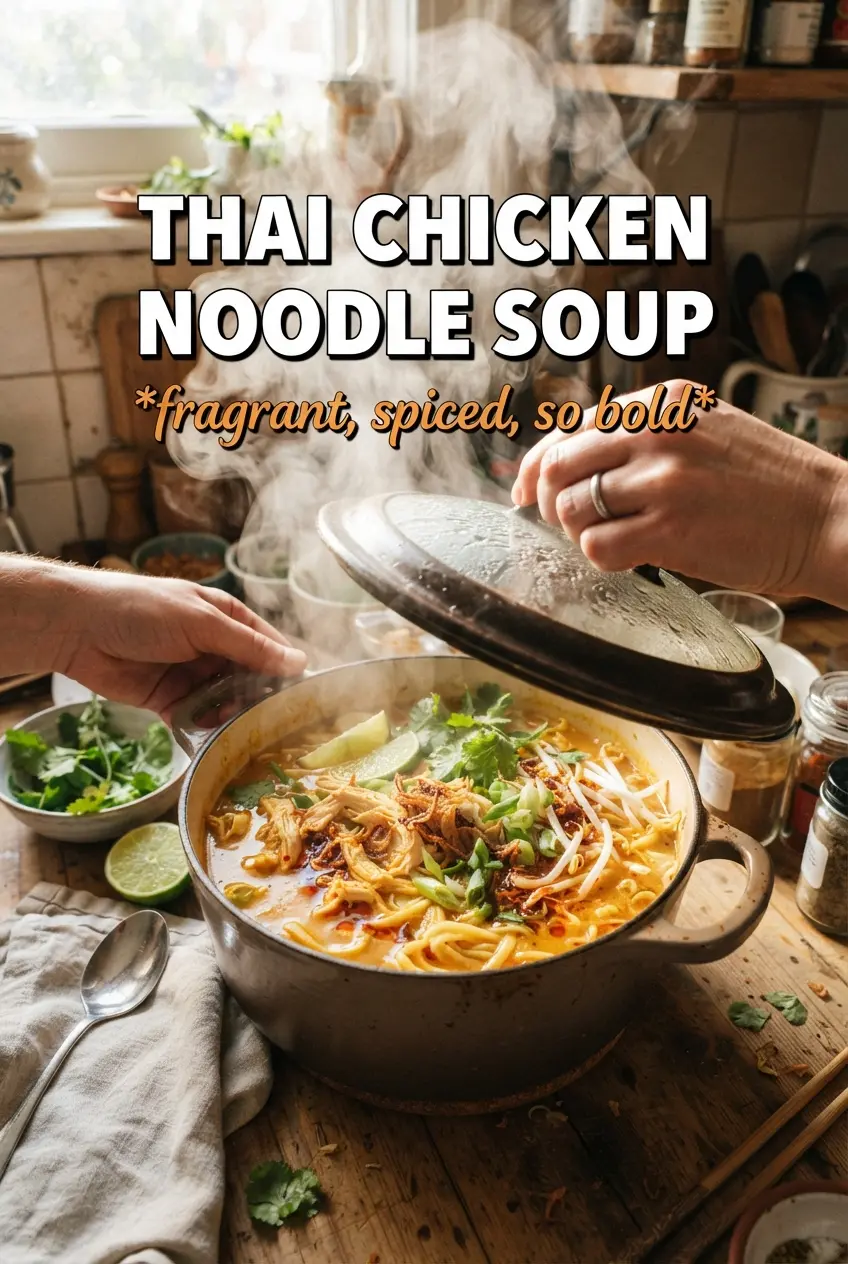
Thai Chicken Noodle Soup
Ingredients
Equipment
Method
- Soak the rice noodles in warm water for 15 minutes, then drain and set aside.
- Thinly slice the chicken breast or thighs and mince the garlic so they’re ready for cooking.
- Heat 1 tablespoon of oil in a large pot over medium heat, then cook the red curry paste for 1-2 minutes until fragrant.
- Add the garlic, lemongrass, and galangal (or fresh ginger) and cook for 1 minute.
- Pour in the coconut milk and chicken broth, then stir in the fish sauce, lime juice, and brown sugar.
- Simmer for 10 minutes so the flavors meld.
- Add the sliced chicken and simmer for 8-10 minutes until cooked through.
- Remove the lemongrass and galangal (or fresh ginger), then add the drained rice noodles and heat through for 2-3 minutes.
- Ladle the soup into bowls and top with bean sprouts, green onions, Fresh Thai basil, cilantro, lime wedges, and sliced red chili.