Deep, golden chicken noodle soup has a way of tasting like it took all day for a reason. The broth carries real body from a whole chicken, the vegetables soften into it without turning muddy, and the noodles soak up enough flavor to matter without going past their point. This version gives you that clean, from-scratch taste you notice as soon as the steam hits the bowl.
The trick is starting the chicken in cold water and letting the pot come up gradually. That slow climb pulls more flavor from the bones and gives you a broth that tastes round instead of thin. Skimming the foam early keeps the broth clear, and straining out the cooked vegetables before you build the soup again keeps the final bowl bright instead of tired.
Below, I’ll walk you through the broth, the point where the noodles go in, and the one timing detail that keeps the chicken tender instead of stringy. There’s also a storage note worth reading if you want leftovers that still taste like soup, not soft noodles in chicken stock.
The broth came out rich and clear, and the noodles held up better than I expected. I added a little extra parsley at the end and it tasted like the kind of chicken soup I remember from childhood.
Save this chicken noodle soup from scratch for the days when you want a deeply flavored broth and tender noodles in one pot.
The Broth Needs Time to Taste Like Broth
If the broth tastes flat, the soup will taste flat no matter how good the noodles are. The difference here comes from simmering a whole chicken with vegetables, herbs, and peppercorns long enough for the bones and skin to give up real body. You’re not chasing a rolling boil. You want a gentle simmer that barely shivers so the broth stays clean and the chicken stays tender.
Foam is the thing that most often makes homemade soup taste muddy. Skim it off after the pot comes to a boil, then lower the heat right away. That small step keeps the broth clear and gives you a cleaner finish in the bowl. The other important move is straining the broth before you add the fresh vegetables. The first set of carrots, celery, and onion has done its job by then.
What Each Ingredient Is Doing in the Pot
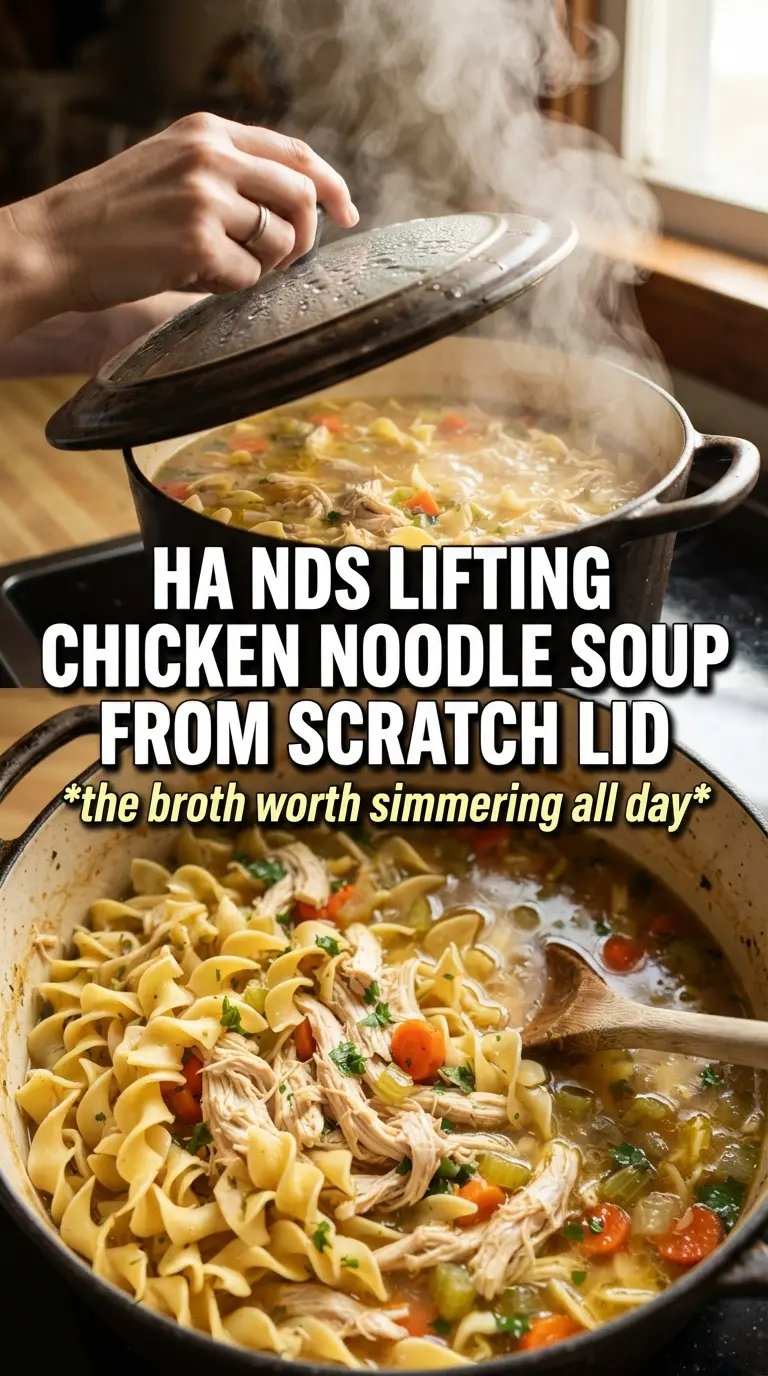
The whole chicken does more than give you meat. It gives you the gelatin and body that make homemade broth feel rich instead of watery. A cut-up chicken can work in a pinch, but a whole bird gives you a deeper stock and more balanced meat-to-broth ratio.
- Whole chicken — This is the backbone of the soup. Once it simmers until the meat slips easily from the bone, you can shred it and add it back at the end so it stays juicy.
- Carrots, celery, onion, garlic, thyme, bay leaves, parsley stems, and peppercorns — These build the broth’s flavor from the start. Parsley stems are worth using because they bring herbal flavor without the delicate leaves going bitter during the long simmer.
- Wide egg noodles — These hold up better than thin pasta and give the bowl that classic chicken noodle soup feel. If you’re using a different noodle shape, watch it closely; overcooked pasta turns the soup starchy fast.
- Fresh parsley — Add it at the end, not earlier. The heat of the soup wakes it up without flattening the flavor.
Building the Soup Without Turning the Noodles Mushy
Start with Cold Water and the Whole Chicken
Put everything for the broth into the pot and cover it with cold water. That slow start lets the chicken and aromatics release flavor gradually instead of tightening up from sudden heat. Bring it to a boil once, skim the foam, then lower it to a steady simmer. If the pot is boiling hard the whole time, the broth can turn cloudy and the chicken can dry out before it’s tender.
Strain, Shred, and Taste the Broth First
When the chicken is falling-apart tender, strain the broth and discard the cooked vegetables. Pull the meat from the bones and shred it into bite-size pieces. Taste the broth before anything else goes back in. If it needs salt now, it will taste right once the noodles and vegetables go in; if you wait until the end, the seasoning can land unevenly.
Cook the Fresh Vegetables Before the Noodles
Return the clear broth to the pot, then add the fresh carrots, celery, and onion. Let them simmer until the carrots are just tender and the onion is no longer sharp. The goal is not soft, collapsed vegetables. It’s a little texture in the final bowl so the soup still feels lively.
Finish with Noodles, Chicken, and Parsley
Add the egg noodles only after the vegetables have had time to soften. They need just enough simmering to turn tender, and then the shredded chicken and parsley go in at the end. If you cook the chicken too long after shredding, it can go stringy. If you leave the noodles in too long, they’ll keep drinking broth and swell past their best texture.
Three Smart Ways to Adapt This Soup
Gluten-Free Without Losing the Comfort
Swap the egg noodles for a certified gluten-free pasta and cook it separately if you can. Gluten-free noodles can break down faster in hot broth, so keeping them out until serving gives you a much better texture. Rice noodles also work, but they give the soup a lighter, less classic feel.
Using Chicken Pieces Instead of a Whole Bird
Bone-in thighs and drumsticks can stand in for the whole chicken if that’s what you have. The broth will still be flavorful, though not quite as full-bodied, because the total amount of bones is lower. Use enough pieces to cover the pot’s bottom well so you still get good depth.
Lighter Vegetables and Extra Herbs
You can add sliced leeks, a little fennel, or extra parsley if you want the soup to taste brighter. Keep the broth stage the same and add delicate herbs at the end so they stay fresh-tasting. This is the easiest way to shift the soup toward a lighter finish without changing the method.
Storage and Reheating
- Refrigerator: Store for up to 4 days. The noodles will keep soaking up broth, so the soup thickens as it sits.
- Freezer: The broth and chicken freeze well for up to 3 months, but the noodles get soft after freezing. For best results, freeze the soup without noodles and cook a fresh batch when you reheat.
- Reheating: Warm it gently over medium-low heat until steaming, not boiling. Hard boiling breaks up the chicken and can push the noodles into mushy territory if they’re already in the soup.
Questions I Get Asked About This Soup
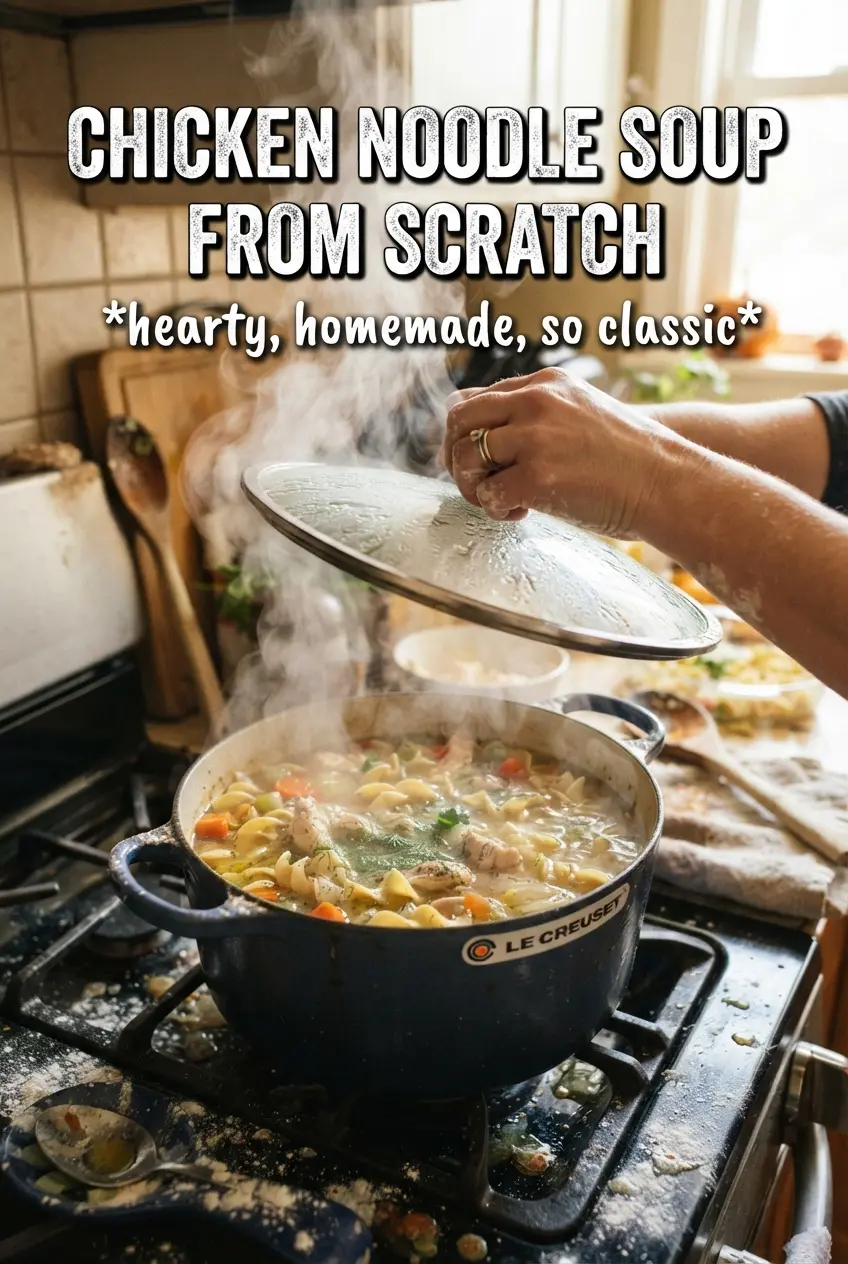
Chicken Noodle Soup From Scratch
Ingredients
Equipment
Method
- Place whole chicken and all broth ingredients (carrots, celery, onion, garlic, bay leaves, peppercorns, parsley stems, dried thyme, and cold water) into a very large pot. Heat to a boil over high heat, then immediately skim foam.
- Reduce heat to a gentle simmer (maintain steady bubbling without a hard boil). Simmer for 1.5 hours, until the chicken is very tender and the broth looks darker and deeply colored.
- Strain the broth and discard the used vegetables. Remove all meat from the chicken and shred it, keeping the shredded chicken aside.
- Return the clear broth to the pot and taste. Season with salt so it’s well balanced before adding the vegetables and noodles.
- Bring the seasoned broth to a simmer (small steady bubbles around the edges). Add sliced carrots, sliced celery, and diced onion.
- Simmer for 10 minutes, stirring occasionally. Cook until the vegetables are tender and bright-tasting.
- Add wide egg noodles to the simmering pot. Cook for 6 to 8 minutes, until the noodles are tender but still have a slight bite.
- Add the shredded chicken and chopped fresh parsley. Cook for 1 to 2 minutes just to warm through and keep the herbs vibrant.
- Taste and adjust the seasoning with salt and pepper. Serve hot.