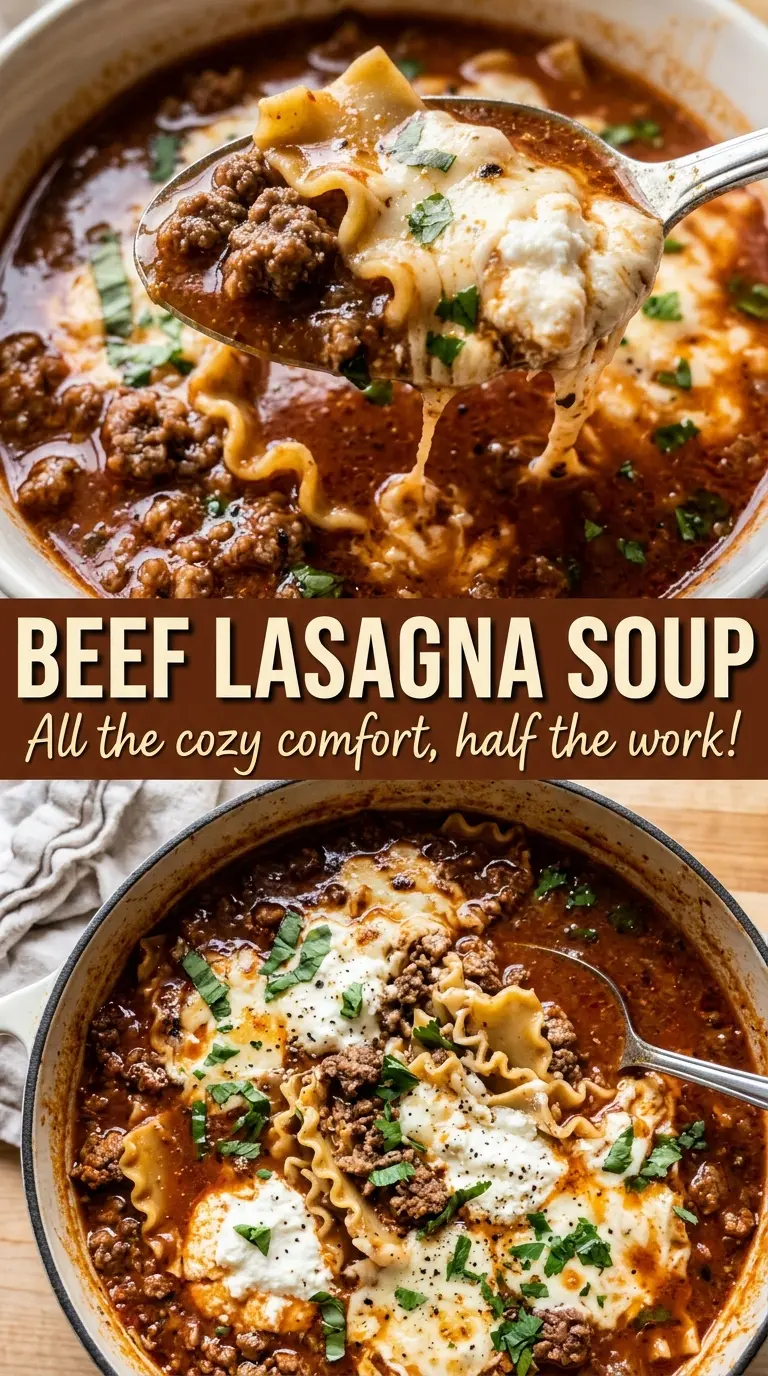
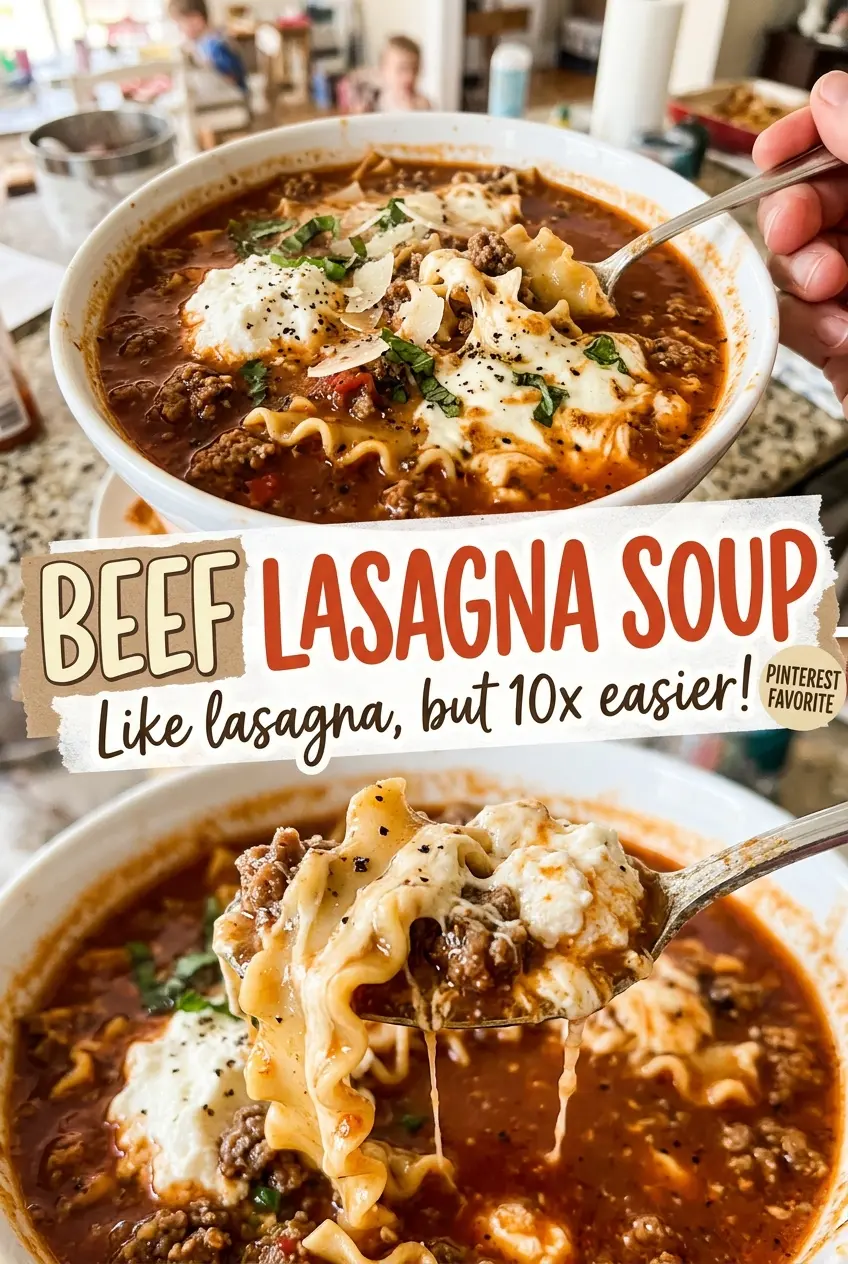
Beef lasagna soup gives you the comfort of a baked pasta dinner without waiting on a casserole dish or dealing with layers. The broth turns rich and tomato-forward, the ground beef adds that hearty, savory base, and the broken noodles soak up just enough of everything to feel like lasagna in spoonable form. The best part is the cheese dollop on top. It melts into the hot soup and turns each bowl creamy in patches instead of making the whole pot heavy.
What makes this version work is building flavor in stages. Browning the beef first gives you a deeper base, then the onion, garlic, and tomato paste cook in the same pot so none of those browned bits go to waste. The noodles go in near the end, which keeps them from turning mushy and thickening the soup past the point where it still tastes like soup.
Below, I’ve included the timing that keeps the pasta tender, the cheese ratio that gives you the right spoonable topping, and a few smart swaps if you need to work with what’s in your kitchen.
The broth was rich and tomato-y, and the broken lasagna noodles stayed tender without getting mushy. That ricotta-mozzarella topping melted into the soup just enough, and my kids asked for seconds before I’d even sat down.
Save this beef lasagna soup for a night when you want all the comfort of baked lasagna with a fast, one-pot finish.
The Trick to Keeping It Tastes-Like-Lasagna, Not Pasta Soup
The biggest mistake with lasagna soup is letting the noodles take over. Once they sit in hot broth for too long, they swell, go soft, and start drinking the liquid until the pot turns thick and starchy. That’s why the noodles go in after the broth is fully seasoned and the soup is already simmering. They only need enough time to turn tender, not enough time to keep cooking themselves into mush.
The other thing that keeps this tasting like lasagna instead of generic beef tomato soup is the cheese on top. Ricotta brings the soft, creamy body you expect, mozzarella melts into strings and pockets, and parmesan adds the salty edge that makes the bowl taste complete. Stirring the cheese straight into the pot would cloud the texture. Keeping it as a dollop preserves that lasagna-like contrast.
- Lean ground beef — Lean beef gives you plenty of flavor without leaving the soup greasy. If you only have a fattier blend, drain the pot after browning or the broth will feel heavy.
- Tomato paste — This is where the depth comes from. Cooking it for a couple of minutes before adding the broth takes away the raw edge and gives the soup a richer, more concentrated tomato base.
- Crushed tomatoes plus diced tomatoes — The crushed tomatoes build body, while the diced tomatoes leave little bursts of tomato in the bowl. Using both gives you a broth that feels fuller than using one can alone.
- Lasagna noodles — Broken noodles are the whole point here. They hold the soup in the spoon and give you that lasagna texture without the layering work. Regular lasagna noodles are best, but any flat pasta cut into large pieces will work in a pinch.
- Ricotta, mozzarella, and parmesan — This mix matters more than it looks like it should. Ricotta keeps the topping creamy, mozzarella gives you melt, and parmesan sharpens the flavor so the dollop doesn’t taste flat.
What Each Ingredient Is Actually Doing in This Recipe
- Primary ingredient (the star) — Quality matters most. Choose the best you can find.
- Cooking medium (oil, butter, or broth) — This carries flavors and prevents dryness.
- Seasonings (salt, pepper, spices, herbs) — Layer flavors so nothing overpowers. Build depth gradually.
- Aromatics (garlic, onion, herbs) — Cook with fat to bloom flavors. Become the foundation.
- Supporting ingredients — Complement the main ingredient without overpowering it.
- Sauce or liquid (if applicable) — Brings flavors together. Balance richness with acid.
- Acid (lemon, vinegar, wine, or other) — Brightens and prevents flat-tasting results.
- Final finish (garnish, glaze, or sauce) — Prevents one-dimensional taste and adds visual appeal.
Building the Broth Before the Noodles Go In
Brown the Beef First
Cook the ground beef in a large pot until it loses its pink color and starts to pick up a little browning. That browning is where the savory backbone comes from, so don’t rush it or crowd the pot with too much liquid too soon. Drain off excess fat if needed, but leave the browned bits stuck to the bottom of the pot. Those bits dissolve into the broth later and give it a deeper, meatier taste.
Cook Out the Tomato Paste
Once the onion softens and the garlic is fragrant, stir in the tomato paste and let it cook for about two minutes. It should darken a shade and smell sweeter, not sharp. If it sits there looking raw and brick-red, it hasn’t cooked enough yet. This small step is what keeps the finished soup from tasting thin or tinny.
Simmer the Broth and Add the Pasta at the End
Pour in the tomatoes, broth, and seasonings, then bring everything to a boil before adding the noodles. After the noodles go in, lower the heat and simmer until they’re tender but still hold their shape. Stir occasionally so they don’t stick to the bottom or clump together. If the soup looks a little loose at first, don’t panic — the noodles will thicken it as they cook, and it will settle into a hearty consistency by the time the pasta is done.
Finish with the Cheese Dollop
Mix the ricotta, mozzarella, parmesan, and basil in a small bowl, then spoon a generous amount into each serving bowl. Ladling the hot soup over the cheese gives you the best melt without turning the whole pot cloudy. The cheese should soften into creamy ribbons and little melty patches. That contrast is what makes each bowl feel like lasagna instead of just tomato soup with pasta.
How to Adapt This for Different Kitchens and Diets
Make It Gluten-Free
Use your favorite gluten-free lasagna noodles or another sturdy gluten-free pasta cut into pieces. Keep a close eye on the simmer time, because gluten-free pasta can soften faster and break apart if it sits too long. Pull the pot off the heat as soon as the noodles are tender.
Use Ground Turkey Instead of Beef
Ground turkey works well if you want a lighter pot, but it needs help from the tomato paste and seasoning because it doesn’t bring the same natural richness as beef. Brown it well and don’t skip the tomato paste step. The soup will be a little cleaner and less deep, but still hearty.
Dairy-Free Topping
Skip the ricotta-mozzarella-parmesan mix and serve the soup with a spoonful of dairy-free ricotta or a sprinkle of dairy-free parmesan-style cheese. You’ll lose some of the classic creamy lasagna finish, but the tomato-beef broth still carries the dish. Fresh basil on top helps keep the bowl bright.
Storage and Reheating
- Refrigerator: 4 days. The noodles will continue to absorb broth, so expect the soup to thicken.
- Freezer: Freezes well if you keep the soup and cheese topping separate. For the best texture, freeze the soup before adding the noodles, then cook fresh pasta when reheating.
- Reheating: Warm gently on the stove over medium-low heat with a splash of broth or water to loosen it. If you boil it hard, the noodles can turn soft and the broth can reduce too far.
Answers to the Questions Worth Asking
Beef Lasagna Soup
Ingredients
Equipment
Method
- Brown the lean ground beef in a large pot over medium-high heat, then drain fat when the crumbles are no longer pink (about 7–10 minutes). Use a clear visual cue: the beef should be browned throughout with no raw spots.
- Sauté the diced onion in the same pot for 4 minutes, stirring until softened. Add the minced garlic and tomato paste and cook for 2 minutes, until fragrant and slightly darkened at the edges.
- Add the crushed tomatoes, diced tomatoes, beef broth, Italian seasoning, dried basil, dried oregano, red pepper flakes, and black pepper, then bring to a boil. Look for rolling bubbles that cover the surface before moving on.
- Add the broken lasagna noodles and reduce heat to maintain a gentle simmer. Keep the pot at an active simmer (not a hard boil) for 10–12 minutes until the noodles are tender.
- Season with salt to taste and stir occasionally to prevent noodles from sticking. Keep the soup bubbling gently as you stir, ensuring noodles don’t clump.
- Mix the ricotta, shredded mozzarella, and parmesan until combined for a thick, spoonable dollop. Add fresh basil for a green speckled finish.
- Ladle the soup into bowls and top each one with a very generous spoonful of the cheese dollop. Serve immediately so the cheese melts into the hot broth.