Tuскan white bean soup lands in the bowl with a thick, brothy body, tender cannellini beans, and that deep savory edge you only get when pancetta, rosemary, and parmesan work together. The kale softens just enough to stay bright, and the whole pot tastes like it simmered longer than it actually did.
What makes this version work is the order. The pancetta fat carries the onion, celery, and garlic, then the tomatoes and broth pick up every browned bit from the bottom of the pot. A parmesan rind adds a round, salty depth that a little extra cheese sprinkled on top can’t copy, and mashing some of the beans at the end gives the soup its body without cream.
Below, I’ll show you the step that keeps the broth from tasting thin, plus a few swaps that still give you a soup with real depth and a finish that feels complete with nothing more than bread and olive oil.
The broth got so rich after I mashed a few of the beans, and the rosemary came through without taking over. I also loved that the kale stayed tender but didn’t turn mushy after reheating the next day.
Save this Tuscan White Bean Soup for the kind of dinner that turns pantry beans, kale, and a parmesan rind into something deeply comforting.
The Trick to Soup That Tastes Like It Simmered All Afternoon
The difference between a flat bean soup and a bowl with real depth usually comes down to two things: building the base in the fat and giving the beans a little help at the end. If you rush past the pancetta, onion, celery, and garlic, the broth never gets that savory backbone. If you leave the beans whole, the soup stays thin even when it tastes good.
This version fixes both problems. Browning the pancetta first creates a seasoned fat that carries the aromatics, and the parmesan rind adds a slow, quiet richness while the soup simmers. Mashing a third of the beans right in the pot thickens the broth naturally, so the texture stays brothy but not watery.
- Cannellini beans — These hold their shape well but still soften enough to mash into the broth. Great northern beans work too, though they’re a little smaller and less creamy.
- Pancetta or bacon — Pancetta brings a cleaner, saltier pork flavor; bacon gives you a smokier bowl. If you skip both, add a little extra olive oil and expect the soup to taste lighter.
- Parmesan rind — This is the ingredient that adds real depth, especially in a broth-based soup. If you don’t have one, use a small handful of grated parmesan at the end, but it won’t do quite the same work during the simmer.
- Kale — Add it near the end so it softens without collapsing. Lacinato kale is especially good here because it stays tender and looks right at home in the bowl.
What Each Ingredient Is Actually Doing in This Recipe
- Primary ingredient (the star) — Quality matters most. Choose the best you can find.
- Cooking medium (oil, butter, or broth) — This carries flavors and prevents dryness.
- Seasonings (salt, pepper, spices, herbs) — Layer flavors so nothing overpowers. Build depth gradually.
- Aromatics (garlic, onion, herbs) — Cook with fat to bloom flavors. Become the foundation.
- Supporting ingredients — Complement the main ingredient without overpowering it.
- Sauce or liquid (if applicable) — Brings flavors together. Balance richness with acid.
- Acid (lemon, vinegar, wine, or other) — Brightens and prevents flat-tasting results.
- Final finish (garnish, glaze, or sauce) — Prevents one-dimensional taste and adds visual appeal.
Building the Base, Then Letting the Soup Thicken Itself
Rendering the Pancetta
Cook the pancetta in a large pot over medium heat until the fat renders and the edges turn crisp. You want a little browned color in the bottom of the pot, not just pale meat sitting in grease. If the heat is too high, the fat will spit and the pancetta will darken before the pot has picked up any useful flavor.
Softening the Aromatics
Add the onion, celery, and garlic to the hot fat and cook until the onion turns translucent and the celery loses its raw edge. The garlic should smell sweet, not sharp. If it starts to brown hard, lower the heat right away, because burnt garlic will carry through the whole soup.
Simmering for Body
Pour in the tomatoes, broth, rosemary, parmesan rind, and Italian seasoning, then add the beans and let everything simmer gently for about 20 minutes. Keep the heat at a steady bubble, not a rolling boil, so the beans stay intact and the broth gets time to pick up the rosemary and parmesan. This is where the soup starts to taste connected instead of separate.
Finishing with Kale
Pull out the rosemary stems and parmesan rind, then mash about a third of the beans against the side of the pot with a spoon or potato masher. Stir in the kale and let it cook just until it turns deep green and tender, 5 to 8 minutes. If you add it too early, it loses its texture and the soup can look muddy.
Make It Dairy-Free Without Losing the Depth
Skip the parmesan rind and finish the soup with a little extra olive oil and a pinch of salt at the table. You’ll lose the nutty parmesan background, but the rosemary, tomatoes, and pancetta still give you a full, savory bowl. If you want a little extra roundness, stir in a spoonful of white miso off the heat.
Vegetarian Tuscan White Bean Soup
Use olive oil instead of pancetta fat and vegetable broth instead of chicken broth. To replace the savory edge you lose from the pork, lean on the parmesan rind if you eat dairy, or add a small spoonful of miso and a little extra black pepper. The soup will still be rich, just more mellow.
Make It Heartier With Sausage or Chicken
Brown Italian sausage or shredded rotisserie chicken after the pancetta step and before the aromatics go in. Sausage makes the soup richer and more filling; chicken keeps it a little lighter but still turns it into a full meal. Either one will absorb the broth nicely without changing the soup’s texture.
Storage and Reheating
- Refrigerator: Keeps well for 4 days. The beans will soften more, and the broth may thicken a bit as it sits.
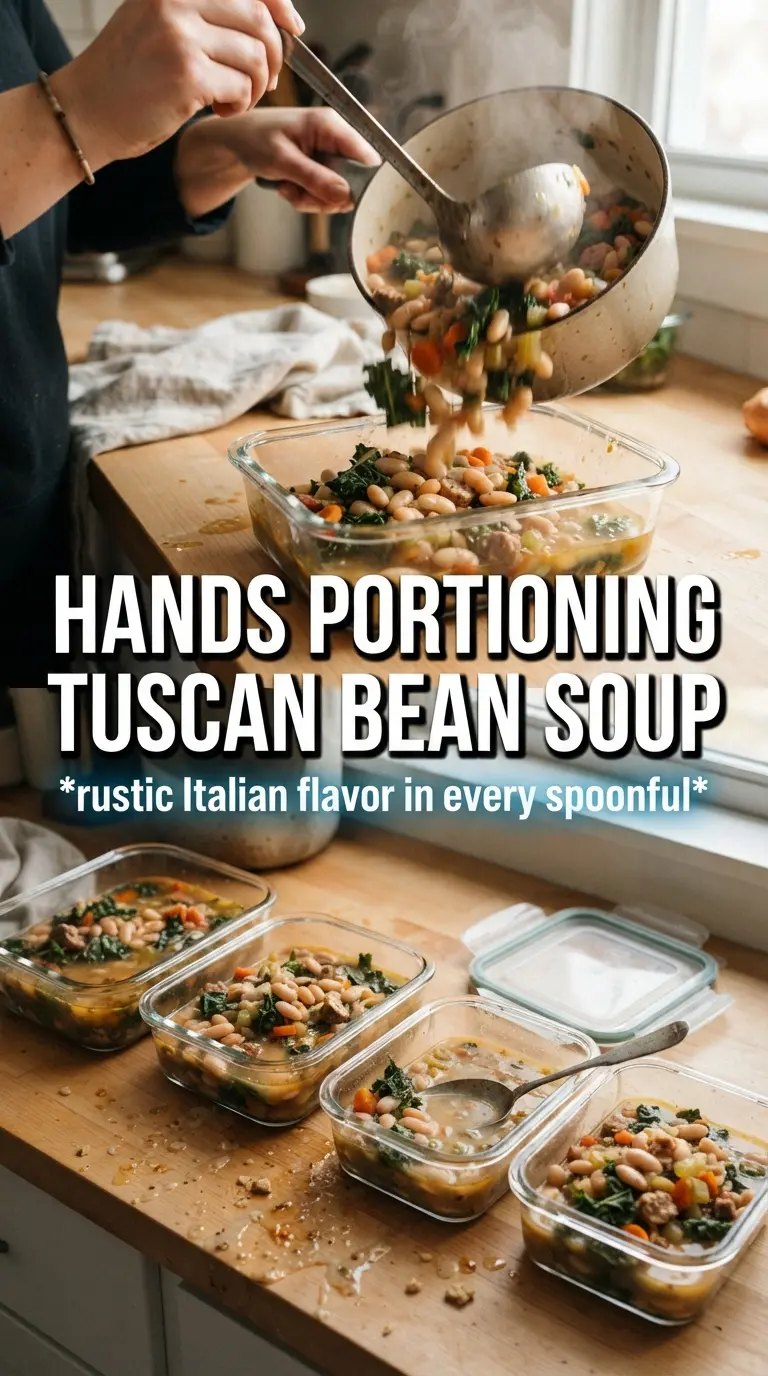
- Freezer: Freezes well for up to 3 months. Cool it completely first, and leave a little space at the top of the container so the broth can expand.
- Reheating: Warm it slowly on the stove over medium-low heat, adding a splash of broth or water if needed. Don’t boil it hard, or the kale can turn dull and the beans can start to break apart too much.
Questions I Get Asked About This Recipe
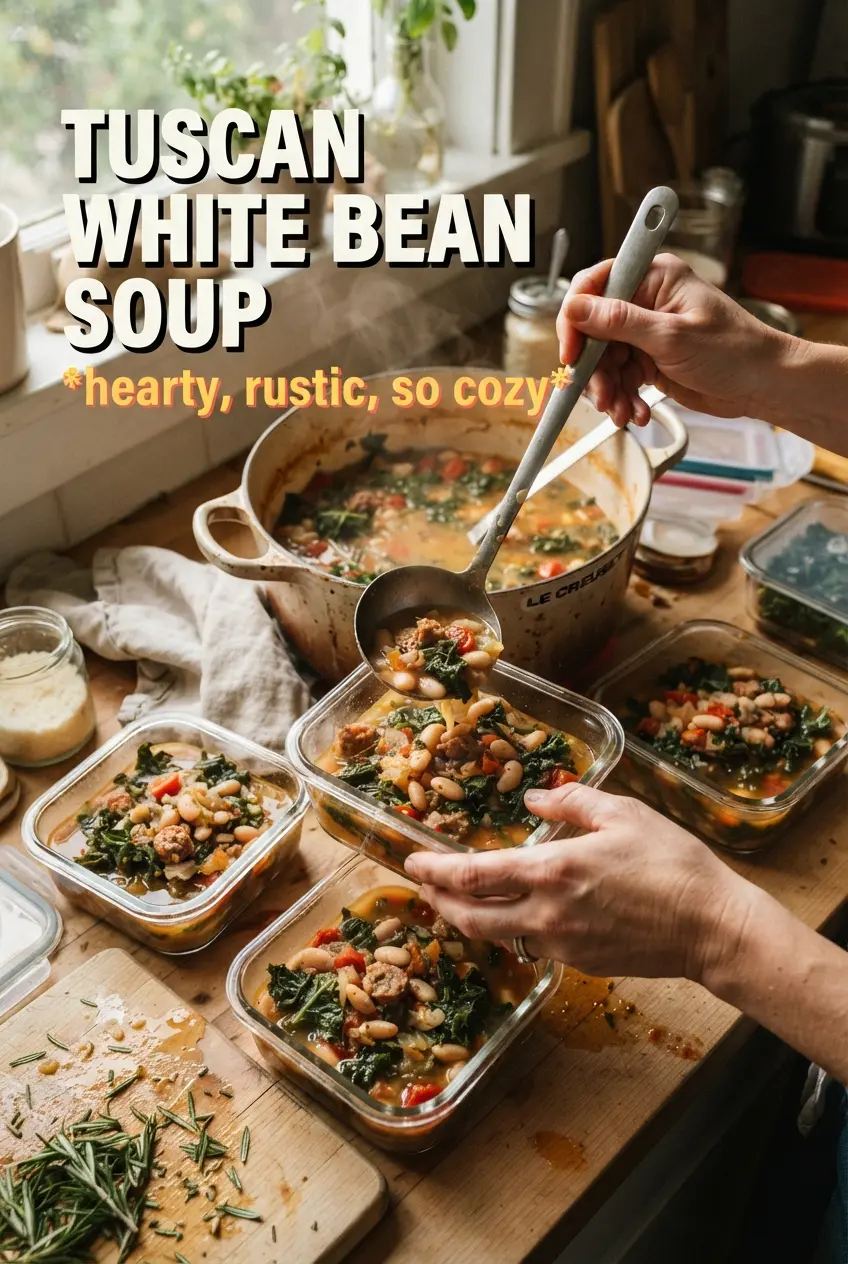
Tuscan White Bean Soup
Ingredients
Equipment
Method
- Heat a large Dutch oven over medium heat and cook the pancetta until crispy, 6-8 minutes. Remove the pancetta and set aside, leaving the rendered fat in the pot.
- In the same pot, sauté the onion, celery, and garlic in the pancetta fat for 5 minutes. Stir until the onion is softened and fragrant.
- Add the diced tomatoes, broth, rosemary sprigs, parmesan rind if using, and Italian seasoning, then bring to a boil. Continue boiling briefly to fully combine the flavors.
- Add the cannellini beans and reduce to a steady simmer. Simmer for 20 minutes, stirring occasionally.
- Remove the rosemary sprigs and parmesan rind from the pot. Mash about a third of the beans in the soup to thicken the broth, then stir well.
- Add the chopped kale and simmer until wilted, 5-8 minutes. Stir through until the greens are tender but still bright.
- Season with salt and black pepper to taste. Ladle into bowls, drizzle with olive oil, top with parmesan shavings and the pancetta, and serve with crusty bread.