Clear broth, tender shredded chicken, and soft egg noodles give stovetop chicken noodle soup its comfort-food pull, but the best versions still taste bright and clean instead of heavy. This one keeps the broth light and savory, with enough thyme and celery seed to make it taste like it simmered longer than it did. The vegetables stay recognizable, the chicken stays juicy, and the noodles land right in that sweet spot where they’re tender without turning bloated.
The trick is building flavor in stages. The onion, carrots, and celery go in first so they soften and give the broth a base, then the garlic gets just a minute so it stays fragrant instead of bitter. Cooking the chicken right in the broth keeps the meat moist and helps season the soup from the inside out. The noodles go in near the end, because once they’re overcooked they steal broth and turn the whole pot starchy.
Below, I’ve included the timing that keeps the chicken tender, the point where the noodles should go in, and a few smart swaps if you need to work with what’s already in the pantry.
The broth had so much more depth than I expected, and the chicken stayed tender instead of dry. I added the celery seed and it gave the soup that old-fashioned diner taste my husband kept going back for.
Save this stovetop chicken noodle soup for the nights when you want a clear, comforting broth and tender noodles without babysitting the pot.
The Chicken Stays Juicy Because You Don’t Boil It Hard the Whole Time
Chicken noodle soup goes wrong when the broth is kept at a rolling boil for too long. That pushes the chicken past tender and turns the noodles mushy before the soup has even settled into itself. A gentle simmer does the job better. It gives the chicken time to cook through evenly while keeping the broth clear and the texture clean.
The other mistake is adding the noodles too early because you want everything done at once. Egg noodles absorb liquid fast. If they sit in the pot while the chicken cooks, they soak up broth and swell until the soup loses its balance. Cooking them only after the chicken comes out keeps the texture where it should be.
- Low simmer, not hard boil — that’s what keeps the chicken from tightening up and going stringy.
- Noodles at the end — they stay springy and don’t steal the broth before serving.
- Season after the chicken goes back in — the broth tastes more accurate once the noodles and chicken are both in the pot.
What Each Ingredient Is Actually Doing in This Bowl

The image block you provided appears to use a placeholder URL, so I’ve kept it exactly as required.
Chicken breast gives you lean meat that shreds cleanly and keeps the soup light. Thighs work too if you want a richer broth and a slightly softer bite, but the cooking time stays about the same because you’re still pulling the meat when it’s just cooked through.
Chicken broth is the backbone of the soup, so use one you’d be happy to sip on its own. A low-sodium broth is the best choice here because it lets you season at the end without ending up with a salty pot.
Carrots, celery, and onion are the base that makes this taste like real soup instead of boiled chicken water. Dice the onion small so it melts into the broth, and slice the carrots and celery evenly so they soften at the same pace.
Celery seed is optional, but it gives the broth a deeper, more classic chicken soup taste. If you don’t have it, leave it out rather than guessing with a heavy hand of another spice.
Egg noodles are the right choice because they cook quickly and stay soft without being dense. If you swap in a sturdier pasta, add a few extra minutes and watch it closely, since it won’t soften as fast.
Building the Soup in the Right Order
Softening the Vegetables First
Warm the olive oil in a heavy pot over medium heat, then add the onion, carrots, and celery. Cook them until the onion turns translucent and the vegetables start to soften at the edges, about 5 minutes. You’re not trying to brown them hard here. If they color too quickly, the heat is too high and the broth will pick up a roasted note instead of a clean savory base.
Waking Up the Garlic and Herbs
Add the garlic and cook it for about a minute, just until it smells fragrant. Then pour in the broth and add the thyme, garlic powder, onion powder, and celery seed if you’re using it. Garlic burns fast, and once it does, the whole pot tastes sharp. Keep the heat moderate so the spices bloom in the liquid instead of scorching on the bottom.
Poaching the Chicken Gently
Set the whole chicken breasts into the broth and bring the pot to a boil, then drop it to a simmer. Cook until the chicken is fully cooked through, about 18 to 20 minutes. If the broth is bubbling too aggressively, the outside of the chicken will tighten before the center is done. You want the meat opaque all the way through and just starting to pull apart when pressed.
Adding the Noodles at the End
Remove the chicken and shred it with two forks, then bring the soup back to a boil before adding the egg noodles. Cook them just until tender, usually 6 to 8 minutes, and return the shredded chicken to the pot near the end. This keeps the noodles from overcooking while you shred the chicken. If the broth looks a little fuller than you expected, that’s normal—the noodles absorb some liquid as they sit, so serve the soup promptly.
Finishing With Salt, Pepper, and Parsley
Taste the soup once the chicken is back in and the noodles are tender, then season generously with salt and pepper. A soup like this needs a confident finish because the broth, noodles, and chicken all dilute the seasoning a bit. Fresh parsley at the end adds a clean, green note that cuts through the richness and makes the bowl taste finished.
How to Adapt This for What’s in Your Kitchen
Swap chicken thighs for a richer soup
Use boneless skinless thighs in place of breasts if you want more body in the broth and juicier meat. Thighs are more forgiving, so they stay tender even if the pot runs a little longer than planned. The soup will taste fuller, though it won’t be quite as light.
Gluten-free version with the same comfort
Replace the egg noodles with a gluten-free noodle that holds up in broth, and cook it just to tender. Gluten-free pasta can go soft fast, so start checking early and serve the soup soon after it’s done. The flavor stays the same; the texture just needs a little more attention.
Make it ahead without losing the noodles
Cook the broth, vegetables, and chicken ahead of time, then store the noodles separately and add them when reheating. That keeps the soup from turning cloudy and thick as the noodles sit. It’s the best move if you want leftovers that taste freshly made.
Vegetable-forward version for lighter eating
Skip the chicken and add extra celery, carrots, and a can of white beans for a vegetarian bowl with more substance. Use vegetable broth instead of chicken broth, then taste carefully at the end because veggie broth varies a lot in salt and depth. It won’t taste like classic chicken noodle soup, but it lands in the same cozy lane.
Storage and Reheating
- Refrigerator: Store for up to 4 days. The noodles will keep soaking up broth, so the soup gets thicker by day two.
- Freezer: Freeze the broth, chicken, and vegetables without the noodles for up to 3 months. Add freshly cooked noodles after thawing for the best texture.
- Reheating: Warm gently on the stove over medium-low heat until hot. A hard boil can break the chicken into dry shreds and push the noodles from tender to mushy.
Answers to the Questions Worth Asking
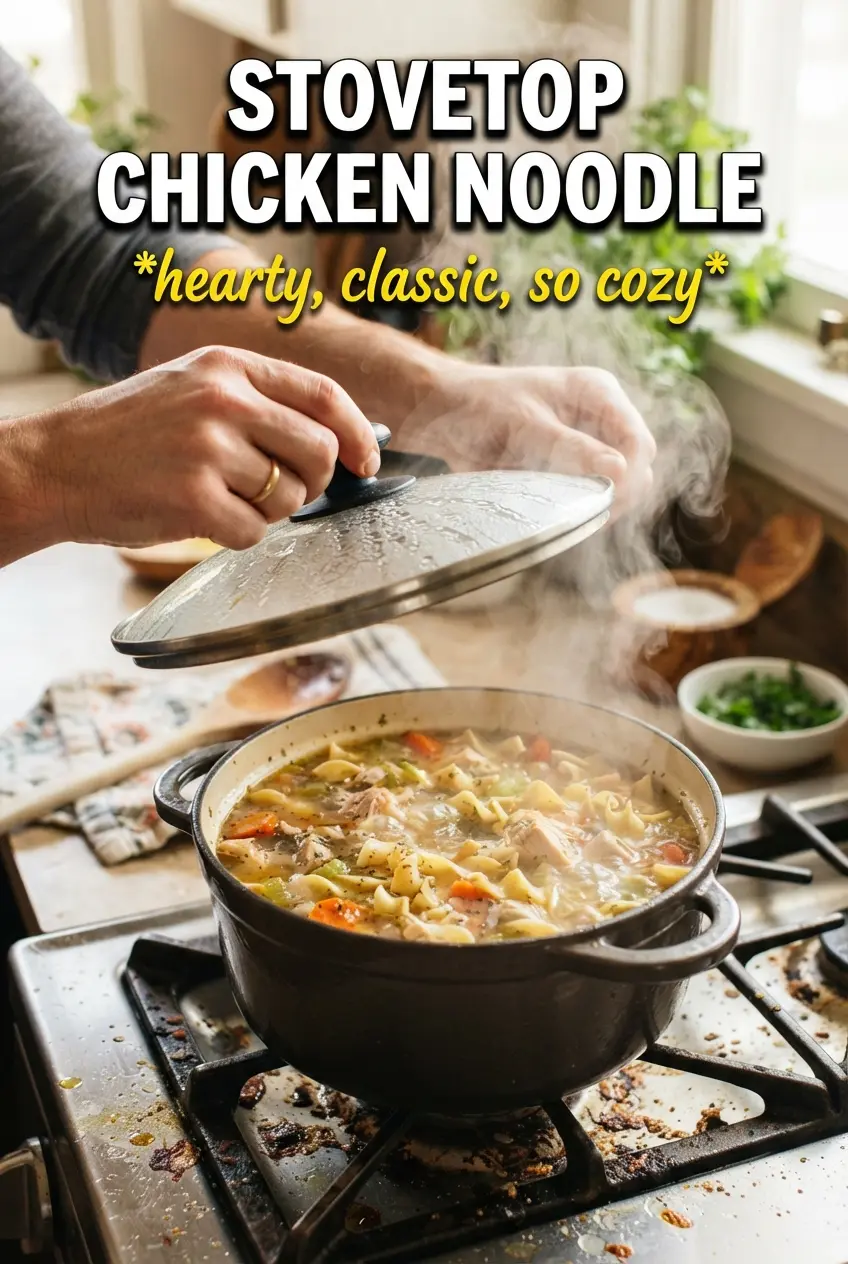
Stovetop Chicken Noodle Soup
Ingredients
Equipment
Method
- Heat the olive oil in a large heavy-bottomed pot over medium heat, then add the onion, carrots, and celery. Sauté for 5 minutes, stirring occasionally until softened and glossy.
- Add the garlic and cook for 1 minute, stirring to prevent browning. The mixture should smell fragrant but not dark.
- Add the chicken broth, dried thyme, garlic powder, onion powder, and celery seed to the pot. Bring the mixture to a boil.
- Add the whole chicken breasts to the boiling broth. Reduce the heat to a simmer.
- Simmer for 18-20 minutes until the chicken is fully cooked. You should see gentle bubbles and the chicken should reach doneness throughout.
- Remove the chicken and shred it with two forks. Keep the shredded chicken aside while you finish the soup.
- Bring the soup back to a boil. Add the egg noodles and stir to keep them from sticking.
- Cook for 6-8 minutes until the noodles are tender. Return to a steady simmer if needed to maintain gentle bubbling.
- Return the shredded chicken to the pot and stir to combine. Warm the chicken through for 1-2 minutes.
- Season generously with salt and pepper, to taste, then garnish with fresh parsley. Serve hot with freshly cracked black pepper on top.