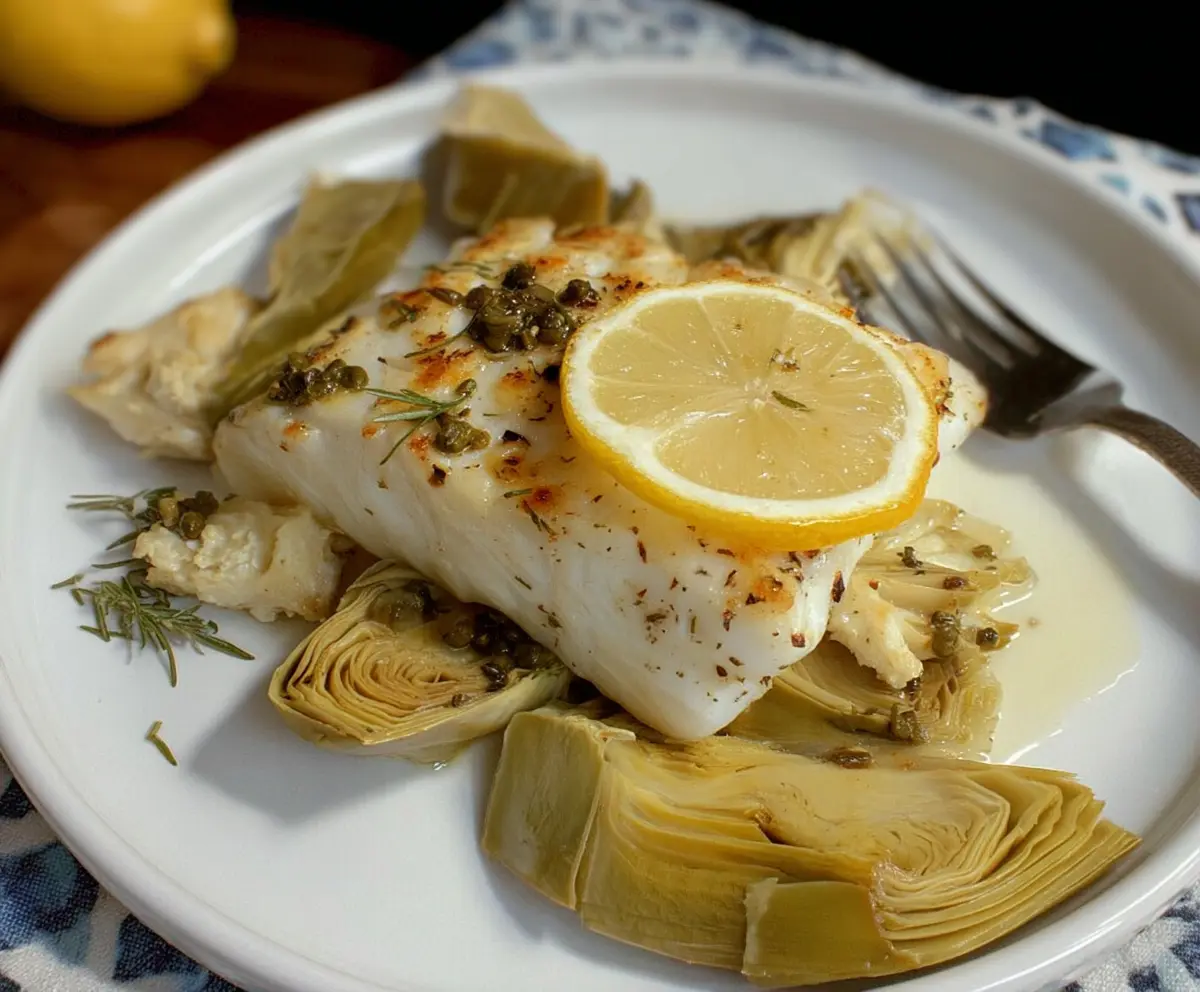
This roasted halibut with artichokes and lemon is a bright and tasty dish that’s easy to make! The flaky fish pairs perfectly with the tangy lemon and tender artichokes.
I love how simple it is to prepare! Just pop it in the oven and enjoy. Your kitchen will smell amazing, and your taste buds will thank you! 🐟🍋
Key Ingredients & Substitutions
Halibut: Halibut is fantastic for its mild taste and flaky texture. If it’s not available, try cod or haddock as great alternatives. These fish also bake well and won’t disappoint!
Artichokes: Fresh artichokes add a lovely texture, but canned artichoke hearts are great for convenience. Just make sure to drain and quarter them well. I often keep a jar of marinated hearts on hand for an extra flavor boost.
Lemon: Besides for slicing, lemon juice brings acidity to the dish. If you need a substitute, try lime or a splash of vinegar, like white wine vinegar, to mimic that zesty flavor.
Olive Oil: This enhances flavor and gives a nice golden finish. If you’re out of olive oil, avocado oil works just as nicely due to its high smoke point and light flavor.
Thyme: Thyme adds earthy notes, but you can use dried oregano or marjoram if you’re out of thyme. Just remember to adjust the amount, as dried herbs are usually more potent!
How Do You Prepare Fresh Artichokes?
Preparing fresh artichokes may seem daunting, but it’s quite simple! Here’s how to do it:
- Start by trimming the stem and cutting off the top inch of the artichoke.
- Remove the tough outer leaves. You can use scissors to trim leaf tips if needed.
- Next, cut the artichoke in half and scoop out the choke (the fuzzy center) with a spoon.
- Steam or boil them in water until tender, which usually takes about 20-30 minutes.
Don’t skip this step—fresh artichokes bring a delightful flavor to the dish! Just remember to keep lemon juice handy to brush on cut surfaces to prevent browning.
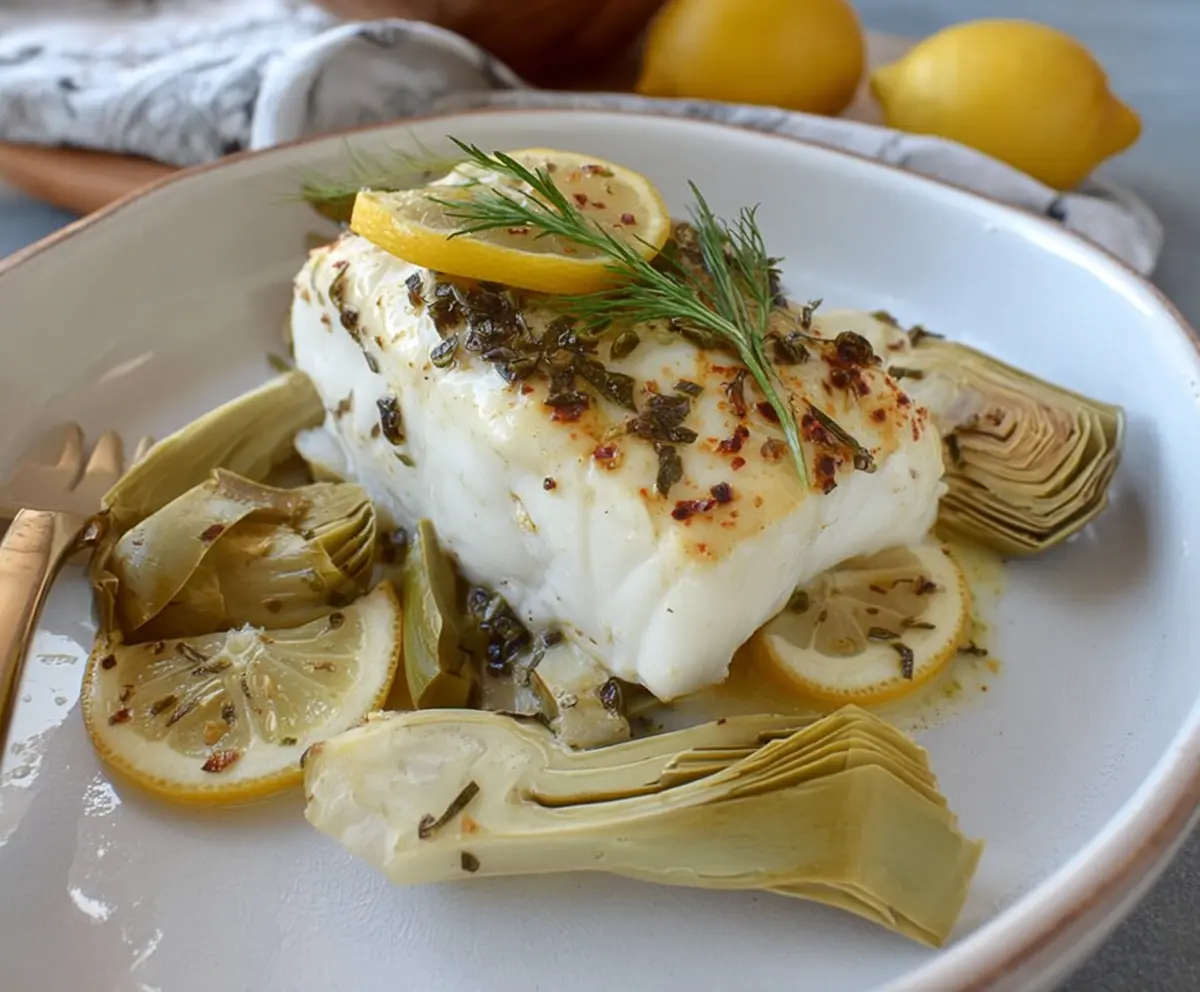
How to Make Roasted Halibut With Artichokes And Lemon
Ingredients You’ll Need:
For The Main Dish:
- 4 halibut fillets (6 oz each)
- 2 large artichokes (or 1 can/jar of marinated artichoke hearts, drained and quartered)
- 1 lemon (thinly sliced, plus additional for juice)
- 2 tablespoons olive oil
- 2 tablespoons capers, drained
- 2 cloves garlic, minced
- 1 teaspoon dried thyme or fresh sprigs of thyme
- Salt and freshly ground black pepper, to taste
- Fresh rosemary sprigs (optional, for garnish)
- 1/4 cup white wine or vegetable/chicken broth (optional)
How Much Time Will You Need?
This delicious dish will take about 15 minutes to prep and 12-15 minutes to cook. If you’re using fresh artichokes, allow an additional 20-30 minutes for cooking them. So you’re looking at around 30-45 minutes total, depending on your ingredient choice!
Step-by-Step Instructions:
1. Preheat the Oven:
First things first, let’s get that oven ready! Preheat your oven to 400°F (200°C) so it’s nice and hot when you’re ready to roast your halibut.
2. Prepare the Artichokes:
If you’re working with fresh artichokes, you’ll want to trim them first. Cut off the tough outer leaves and the top inch of the artichoke, and scoop out the fuzzy choke in the center. Then, steam or boil them until they’re tender, which takes about 20-30 minutes. If you have jarred artichoke hearts, just drain and cut them into quarters, and you’re all set!
3. Arrange the Artichokes:
In a baking dish, arrange the artichokes in a single layer. Drizzle them with 1 tablespoon of olive oil, and sprinkle with salt, pepper, and half of the minced garlic. This will help to flavor the artichokes perfectly!
4. Place the Halibut:
Now we get to the star of the dish! Lay the halibut fillets gently on top of the arranged artichokes. Drizzle the remaining olive oil over the fish and squeeze some fresh lemon juice on top. Season the halibut with salt and pepper, thyme, and the rest of the minced garlic for extra zest.
5. Add Capers and Lemon:
Sprinkle the drained capers over both the fish and artichokes, and finish by topping each fillet with a thin slice of lemon. The lemon will add a wonderful citrusy aroma as it roasts!
6. Pour in the Liquid (Optional):
If you want your dish to have that extra moisture and depth of flavor, pour the white wine or broth around the fillets in the baking dish. This step is optional, but I highly recommend it!
7. Roast in the Oven:
Now, place your dish in the preheated oven and roast for about 12-15 minutes. You’ll know it’s ready when the halibut is opaque and flakes easily with a fork. Keep an eye on it to avoid overcooking!
8. Let it Rest:
After removing it from the oven, give the dish a little time to relax for a couple of minutes. This helps the flavors meld together beautifully.
9. Garnish and Serve:
For that finishing touch, garnish with fresh rosemary sprigs if you like. Serve the halibut alongside the artichokes and drizzle a bit of roasted lemon juice over it. Enjoy your flavorful meal that’s both healthy and hearty!
Bon appétit! Enjoy your tender, flavorful roasted halibut complemented by the bright lemon and earthy artichokes!
Can I Use Frozen Halibut Instead of Fresh?
Yes, you can use frozen halibut, but it’s best to thaw it completely before cooking. Thaw the fish in the refrigerator overnight or place it in a sealed bag submerged in cold water for quicker thawing. Pat it dry with paper towels before seasoning and roasting to avoid excess moisture.
How Do I Store Leftovers?
Leftover roasted halibut can be stored in an airtight container in the fridge for up to 2 days. To reheat, gently warm it in the oven at a low temperature or microwave it for a short time. Adding a splash of broth or water can help prevent it from drying out.
Can I Substitute Fresh Artichokes for Canned Ones?
Absolutely! Fresh artichokes will add a more vibrant flavor and texture, but canned artichoke hearts are a convenient option. Just make sure to drain and quarter them properly. For fresh artichokes, remember to steam or boil them until tender before adding to your dish.
What Can I Use Instead of White Wine?
If you prefer not to use white wine, you can substitute it with vegetable or chicken broth. This will still add moisture and flavor to the dish. Alternatively, a splash of lemon juice mixed with water can create a nice acidity without alcohol.