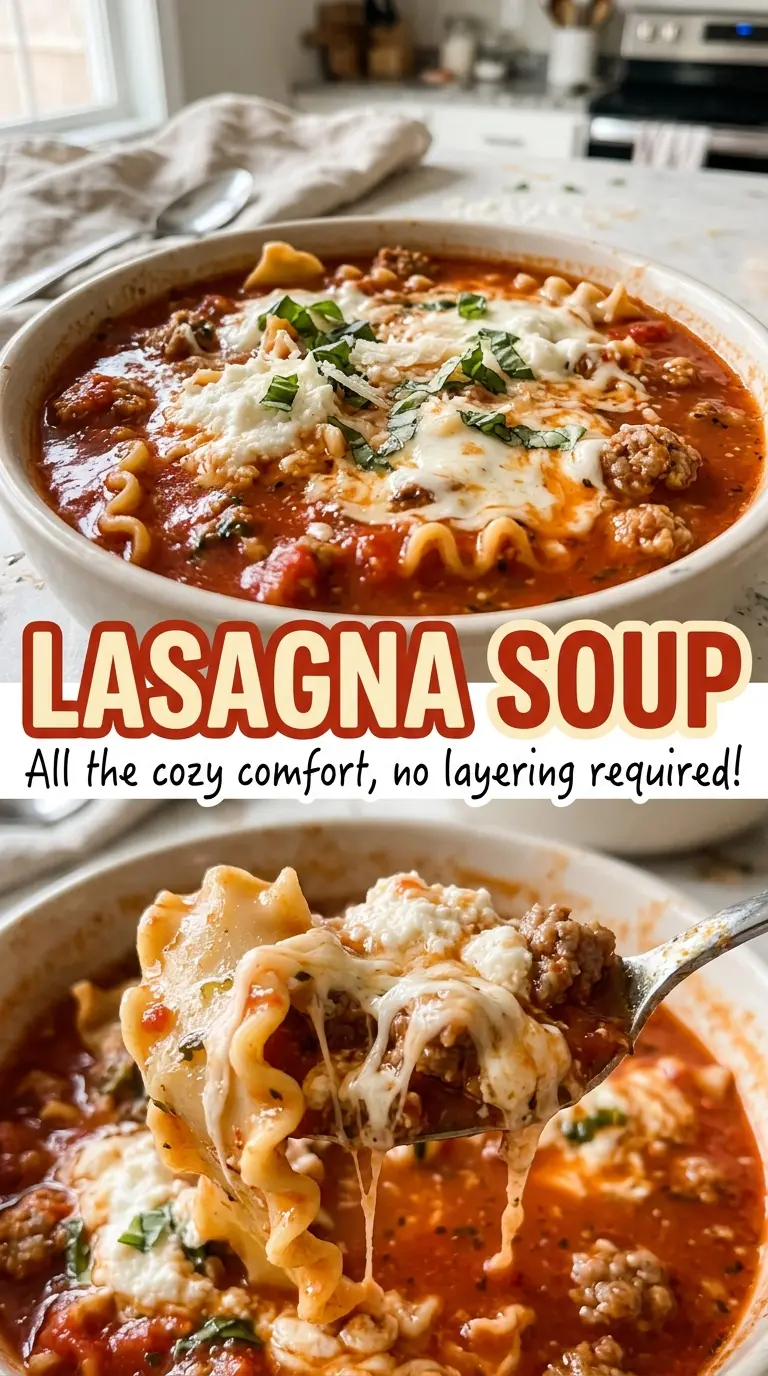
Lasagna soup gives you everything people love about a baked pan of lasagna without the extra layering, baking, or waiting. The broth turns rich and tomato-forward, the sausage brings depth, and the broken noodles soak up just enough flavor to feel substantial without turning mushy. The best bowl has a little heat, a lot of savory meatiness, and that creamy cheese dollop melting into the center as you eat.
What makes this version work is the order. Browning the sausage first builds the base flavor, and cooking the tomato paste until it darkens keeps the broth from tasting flat. The noodles go in near the end so they stay tender instead of bloated, and the ricotta-mozzarella topping gives you that classic lasagna finish in one spoonful.
Below, I’ll walk through the little details that keep the broth bold and the noodles just right, plus a few easy ways to adapt the pot for what you have on hand.
The broth tasted like it had been simmering all day, and the noodles stayed perfectly tender instead of getting bloated. The ricotta-mozzarella topping melted into the soup just enough that every bowl tasted like real lasagna.
Love the rich tomato broth and cheesy ricotta topping? Save this lasagna soup for the night you want comfort food without layering a whole pan.
The Key Move That Keeps Lasagna Soup From Turning Starchy
The noodles are the part most likely to go wrong. If they simmer too long, they drink up too much broth and turn soft in the middle of the pot. That’s why they go in only after the tomato base is seasoned and already simmering. You want them tender with a little bite left, since they’ll keep softening once the heat is off.
The other mistake is rushing the tomato paste. A minute or two in the hot pot changes it from raw and tinny to deep and savory. That small step gives the broth the backbone it needs, especially since this soup doesn’t have the long bake time of traditional lasagna.
- Italian sausage — This does most of the heavy lifting for flavor, so use a sausage you actually like eating. Mild or hot both work. If you swap in ground turkey or chicken sausage, add a little extra olive oil and taste carefully at the end, since leaner meat needs more help.
- Tomato paste — Don’t skip the brief cooking time. It needs to darken in the pot so the soup tastes rounded instead of sharp.
- Ricotta, mozzarella, and parmesan — This cheese mixture is what makes the bowl taste like lasagna instead of basic tomato soup. Freshly grated parmesan melts better than the shelf-stable kind, and whole-milk ricotta gives a creamier finish, but part-skim ricotta still works if that’s what you have.
- Lasagna noodles — Break them into irregular pieces rather than neat lengths. The rough edges catch the broth and cheese better, and the soup feels more like lasagna in a spoon.
What Each Ingredient Is Actually Doing in This Recipe
- Primary ingredient (the star) — Quality matters most. Choose the best you can find.
- Cooking medium (oil, butter, or broth) — This carries flavors and prevents dryness.
- Seasonings (salt, pepper, spices, herbs) — Layer flavors so nothing overpowers. Build depth gradually.
- Aromatics (garlic, onion, herbs) — Cook with fat to bloom flavors. Become the foundation.
- Supporting ingredients — Complement the main ingredient without overpowering it.
- Sauce or liquid (if applicable) — Brings flavors together. Balance richness with acid.
- Acid (lemon, vinegar, wine, or other) — Brightens and prevents flat-tasting results.
- Final finish (garnish, glaze, or sauce) — Prevents one-dimensional taste and adds visual appeal.
Building the Broth Before the Noodles Go In
Brown the Sausage First
Cook the sausage over medium-high heat until it’s deeply browned and broken into small crumbles. The color matters here; pale sausage makes a flat soup. If there’s excess fat after browning, drain it off, but leave enough in the pot to carry the onion and garlic.
Cook the Tomato Paste Until It Darkens
Add the tomato paste to the hot pot and stir it for a minute or two. It should look darker and smell sweeter, not raw. If you dump in the broth too soon, you miss the step that gives this soup its richer, more lasagna-like base.
Simmer the Noodles Just to Tender
Once the tomatoes and broth come to a boil, add the broken noodles and lower the heat to a steady simmer. Stir now and then so they don’t stick together or sink to the bottom and scorch. Pull the pot from the heat when the noodles are tender but still have shape; they’ll keep soaking up liquid while the soup sits.
Finish With the Cheese Dollop
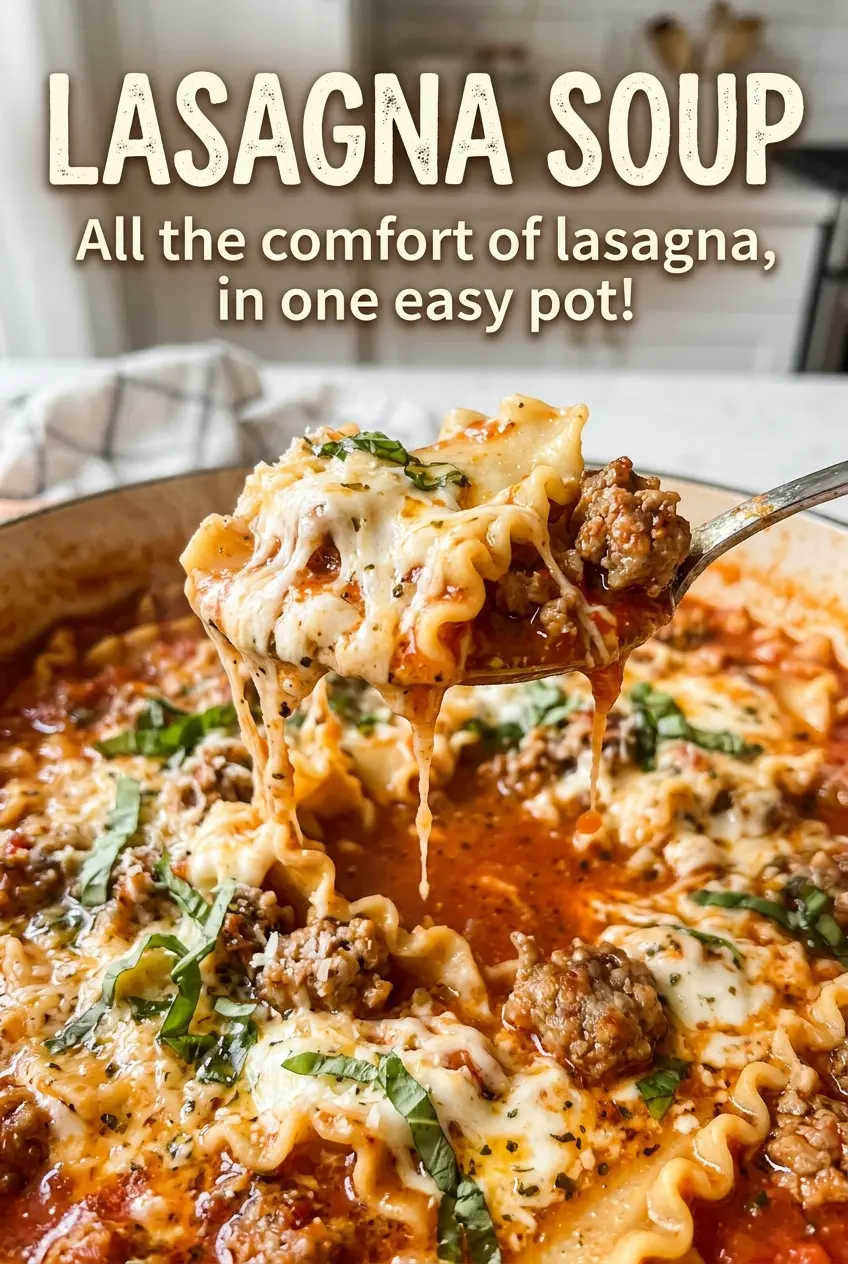
Stir the ricotta, mozzarella, parmesan, and basil together in a bowl, then spoon it over each serving. The heat from the soup should soften it into creamy pockets without fully dissolving it. That contrast is what makes the bowl taste like lasagna instead of just tomato soup with cheese on top.
How to Adapt This for Different Kitchens and Different Eaters
Make It With Ground Turkey Instead of Sausage
Ground turkey gives you a lighter soup, but it won’t bring the same built-in seasoning or richness. Add a little extra Italian seasoning and taste for salt at the end. A spoonful of olive oil helps replace the fat you lose when you skip sausage.
Gluten-Free Version
Use your favorite gluten-free lasagna noodles and watch the simmer closely, since some brands soften faster than standard pasta. If the noodles are especially delicate, undercook them by a minute so they hold up after serving.
Dairy-Free Topping Swap
Skip the ricotta-mozzarella mixture and top each bowl with a drizzle of good olive oil and a little extra basil. You’ll lose the creamy lasagna finish, but the broth and sausage still carry the dish well. A dairy-free mozzarella-style shreds can work, though they melt more loosely than the real thing.
Storage and Reheating
- Refrigerator: Store the soup for up to 4 days. The noodles will keep absorbing broth, so expect a thicker texture the next day.
- Freezer: The soup base freezes well, but the noodles soften too much if frozen in the pot. For best results, freeze the tomato-sausage broth without noodles and add fresh pasta when reheating.
- Reheating: Warm it gently on the stove over medium-low heat with a splash of broth or water if needed. High heat can break down the noodles and make the soup gluey.
Questions I Get Asked About This Recipe
Lasagna Soup
Ingredients
Equipment
Method
- Brown the Italian sausage in a large pot over medium-high heat, breaking it into crumbles, until cooked through and browned, about 6-8 minutes; drain excess fat.
- Sauté the onion in the same pot for 4 minutes, stirring occasionally, until softened; keep the heat at medium.
- Add the garlic and cook for 1 minute, stirring, until fragrant and lightly golden.
- Stir in the tomato paste and cook for 1-2 minutes until darkened, scraping up any browned bits from the bottom.
- Add the crushed tomatoes, diced tomatoes, broth, Italian seasoning, dried basil, and red pepper flakes and bring to a boil, with active bubbling around the edges.
- Add the lasagna noodles and simmer for 10-12 minutes until the noodles are tender, stirring once halfway through.
- Season with salt and pepper to taste, tasting and adjusting until the broth flavor is balanced.
- Mix the ricotta, shredded mozzarella, parmesan, and fresh basil together until combined into a soft, spoonable mixture.
- Ladle the soup into bowls and top each with a generous dollop of the cheese mixture, letting it melt slightly into the center.