Paula Deen lasagna soup has the kind of rich, spoon-coating broth that makes a regular pot of soup feel like a full, comforting dinner. You get the savory depth of browned sausage and beef, the sweetness of tomatoes cooked down with a little butter, and those soft lasagna noodles that turn the whole bowl into something that eats like lasagna without the layering. The best part is the cheese on top. A big dollop of ricotta and mozzarella melts into the soup and gives every bite that creamy, stretchy finish people usually hope for in baked lasagna.
What makes this version work is the balance of heavy and bright ingredients. Butter and tomato paste build a richer base, but the crushed tomatoes, diced tomatoes, and chicken broth keep it loose enough to stay soupy instead of turning into a stew. Browning the sausage and beef first matters, because that step gives you the savory backbone that canned tomatoes alone can’t deliver. The noodles go in near the end so they stay tender without dissolving into the pot.
Below, I’ve included the timing that keeps the noodles from going mushy, plus the easiest way to get that cheese topping extra creamy instead of stiff. A couple of small adjustments make this soup taste like it simmered all afternoon, even though it comes together fast.
The broth came out rich without being greasy, and the noodles stayed perfectly tender after 11 minutes. The ricotta-mozzarella topping melted into the soup just like lasagna filling, and my husband asked if I could put this in the weekly rotation.
Save this Paula Deen lasagna soup for a thick, cheesy bowl that tastes like lasagna without all the layering.
The Secret to Lasagna Soup That Tastes Rich, Not Thin
The mistake most lasagna soups make is treating the broth like plain tomato soup with noodles tossed in at the end. That leaves you with something flat and one-note. This version builds flavor in stages: the meat gets browned, the onions soften in the fat, and the tomato paste cooks long enough to darken and lose its raw edge before the broth goes in. That little bit of butter also matters. It rounds out the acidity and gives the soup the richer, almost silky body people expect from Paula Deen-style cooking.
The noodles are the other place people go wrong. If they simmer too long, they turn gummy and make the whole pot too thick. Add them only after the broth is boiling, then pull the pot as soon as they’re tender with a little bite left in the center. They’ll keep softening in the hot broth even after the burner is off.
What the Cheese Topping Is Doing Here
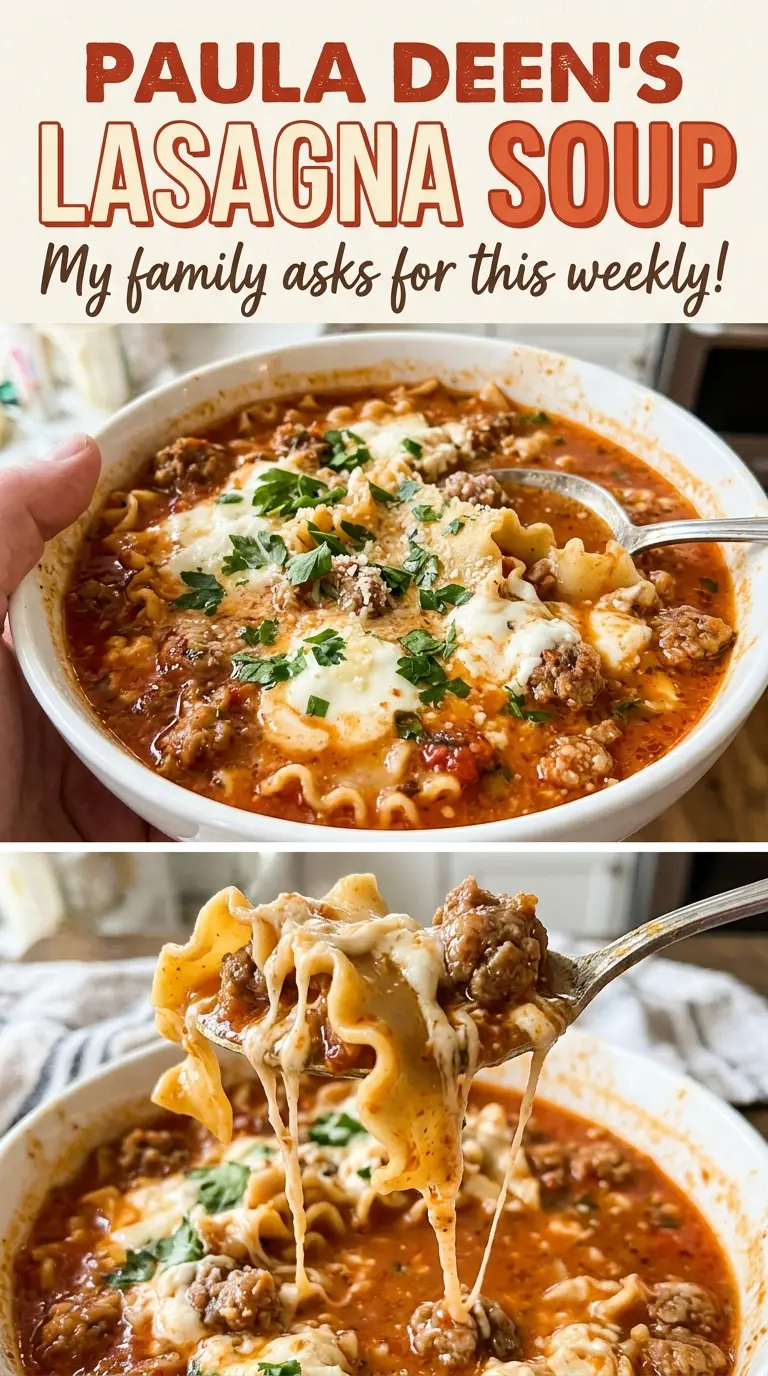
The cheese topping isn’t garnish. It’s the part that gives this soup its lasagna identity. Whole milk ricotta brings body and a soft, creamy texture that holds its shape for a moment before melting into the bowl. Mozzarella adds the stretch and parmesan sharpens everything so the top doesn’t taste bland or milky.
- Italian sausage — This carries most of the seasoning in the pot, especially if you use a mildly spiced sausage. Hot sausage works too if you want more heat, but the fat and browning are what matter most.
- Ground beef — Beef deepens the flavor and makes the soup taste fuller. If you skip it, the broth will still work, but it won’t have the same hearty, almost bolognese-like base.
- Butter — This is part of the richness, not just a cooking fat. It softens the tomato edge and gives the broth a rounder finish.
- Tomato paste — Cook it with the onion and garlic until it turns brick red and smells sweet. That step removes the raw taste and builds a thicker, more concentrated broth.
- Ricotta — Use whole milk ricotta if you can. Part-skim ricotta works, but it tends to taste a little drier and less lush once it hits the hot soup.
Building the Pot in the Right Order
Brown the Meat First
Start with the sausage, beef, and butter in a large pot and let the meat get real color before you think about the next step. You want browned bits on the bottom, not gray meat sitting in fat. That fond becomes part of the broth later. If the pot starts to look dry before the meat browns, the butter is doing its job and you should let it keep working.
Cook the Aromatics Until They Smell Sweet
Add the onion and let it soften in the rendered fat for about four minutes, then stir in the garlic and tomato paste. The onion should look translucent at the edges, and the garlic should smell fragrant, not sharp. If the garlic goes in too early, it can burn while the onions are still catching up, and burnt garlic will take over the whole pot.
Let the Broth Simmer Before the Noodles Go In
Once the tomatoes, broth, seasoning, and basil are in, bring the pot to a boil, then lower it to a steady simmer before adding the noodles. This keeps the soup from boiling itself down too fast while the pasta cooks. Break the lasagna noodles into uneven pieces so the bowl feels rustic and the noodles don’t all sit in one perfect layer. Stop cooking when they’re tender but still hold their shape.
Finish With a Big Cheese Spoonful
Mix the ricotta, mozzarella, parmesan, and basil in a bowl while the soup finishes cooking. Ladle the soup into bowls first, then top each serving with a generous mound so the heat can soften the cheese without dissolving it completely. If you stir the cheese into the pot, it disappears into the broth and you lose the contrast that makes this dish work.
Ways to Adjust the Soup Without Losing What Makes It Good
Make it a little lighter
Use all ground beef or swap half the sausage for turkey sausage. You’ll lose some of the rich sausage fat, so the soup will taste a little cleaner and less heavy, but the tomato broth still holds up well. Keep the butter and the tomato paste step so the base doesn’t turn flat.
Gluten-free version
Use your favorite gluten-free lasagna noodles and cook them separately if they tend to break down quickly. Stir them into individual bowls before ladling in the soup so they don’t absorb too much broth in the pot. The flavor stays the same, but the texture is a little more delicate.
Dairy-free topping swap
Skip the ricotta-mozzarella-parmesan topping and finish each bowl with a spoonful of dairy-free ricotta or a drizzle of cashew cream. You won’t get the same stretch, but you’ll still get a creamy finish that balances the acidic tomato broth. Add a little extra basil to keep the topping bright.
Storage and Reheating
- Refrigerator: Store the soup for up to 4 days. The noodles will continue absorbing broth, so it will thicken as it sits.
- Freezer: Freeze the soup without the noodles if you can. Pasta gets soft after freezing, so for the best texture, freeze the tomato-meat base and add fresh noodles when reheating.
- Reheating: Warm it gently on the stove over medium-low heat with a splash of broth or water. High heat can make the noodles break apart and can turn the soup overly thick.
Answers to the Questions Worth Asking

Paula Deen Lasagna Soup
Ingredients
Equipment
Method
- Brown the Italian sausage and ground beef together in a large pot with the unsalted butter over medium-high heat until cooked through. Drain excess fat so the soup is not greasy.
- Sauté the diced onion in the pot for 4 minutes. Add the minced garlic and tomato paste, then cook for 2 minutes, stirring until fragrant.
- Add the crushed tomatoes, diced tomatoes, chicken broth, Italian seasoning, and dried basil, then bring to a boil. Keep the pot at a rolling boil to fully heat the broth.
- Add the broken lasagna noodles and simmer for 10-12 minutes, stirring occasionally. Cook until the noodles are tender and the broth thickens slightly.
- Season the soup generously with salt and pepper. Taste and adjust so the flavors stand out against the cheese topping.
- Mix the whole milk ricotta, shredded mozzarella, parmesan, and fresh basil together until evenly combined. The mixture should be thick enough to mound on top.
- Ladle the soup into bowls and top each with a very large, heaping spoonful of the cheese mixture. Let it sit briefly so the cheese begins to melt into the hot broth.