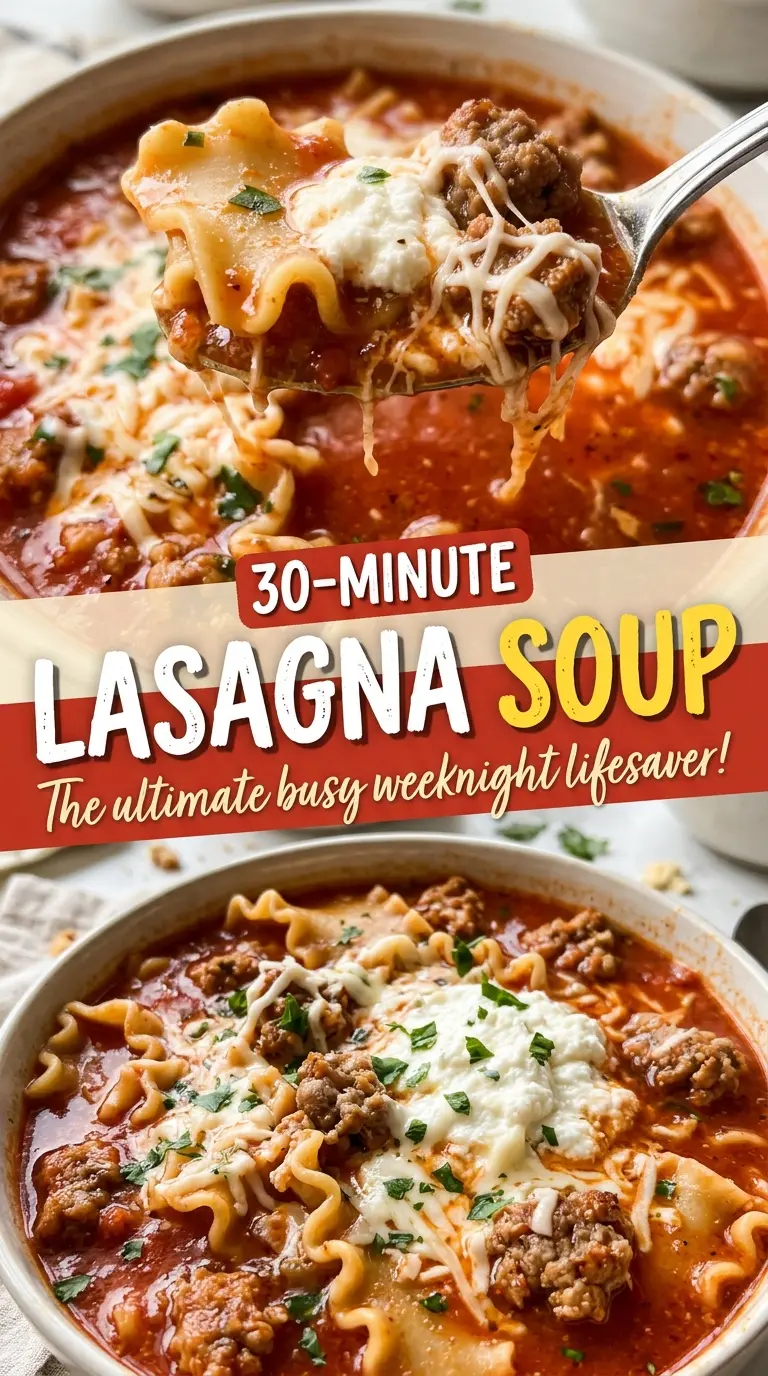
Rich tomato broth, craggy bits of Italian sausage, and tender ribbons of broken lasagna noodles give this soup the same comfort as a baked pan of lasagna, but without the wait. The cheese dollop on top melts into the bowl and turns every spoonful creamy, savory, and a little decadent. It tastes like a long-simmered dinner, but it lands on the table in half an hour.
What makes this version work is that it leans on ingredients that already carry a lot of flavor. A good jar of marinara gives the broth a head start, while the sausage seasons the base as it browns. The noodles cook right in the soup, which lets them release starch and thicken the broth just enough without turning it heavy. The ricotta-mozzarella topping is the fast trick that gives you that lasagna finish without layering, baking, or waiting around.
Below, you’ll find the small details that keep the noodles from getting mushy and the cheese topping from disappearing into the pot. Those two things are what separate a decent lasagna soup from one you’ll want to make again.
The broth had so much flavor in 30 minutes, and the noodles stayed perfectly tender instead of turning mushy. My husband kept saying it tasted like lasagna in a bowl, and the ricotta on top made it extra creamy.
Save this 30-minute lasagna soup for the nights when you want the comfort of baked lasagna without the layering, baking, or extra dishes.
The Noodle Trick That Keeps This Soup from Turning to Mush
The biggest mistake people make with lasagna soup is treating the noodles like they have all the time in the world. They don’t. Broken lasagna noodles keep cooking after the heat is off, and if you let them simmer too long, the broth turns starchy and the pasta goes soft in a hurry. This recipe keeps that under control by boiling the noodles just until tender and serving the soup right away.
The other thing that helps is the order of the pot. Brown the sausage first so you get those browned bits on the bottom, then build the soup in the same pot. That gives the broth a deeper base without needing to simmer for an hour. If your soup ever tastes flat, it usually means the sausage wasn’t browned enough or the marinara you used was too mild.
What Each Ingredient Is Actually Doing in This Soup
The ingredient list is short, which means each piece has to pull its weight.
- Italian sausage — This is the backbone of the soup. It seasons the broth as it cooks, and the rendered fat carries flavor through the whole pot. Mild or hot both work; hot sausage gives you more heat without adding extra spices.
- Marinara sauce — A good jarred sauce saves time and gives you instant tomato depth. Pick one that tastes balanced on its own, because there isn’t enough simmer time here to fix a thin or overly sweet sauce.
- Chicken broth — This loosens the marinara into soup territory and keeps the dish from tasting like straight pasta sauce. Use low-sodium broth if you can, since the sausage and cheese already bring salt.
- Lasagna noodles — Standard noodles are perfect here because they hold their shape and have enough structure to stay chewy. Break them into uneven pieces so the bowl feels rustic and spoonable.
- Ricotta, mozzarella, and parmesan — This is the fast stand-in for lasagna layers. Ricotta brings creaminess, mozzarella adds stretch, and parmesan sharpens the topping so it tastes like more than just melted cheese.
- Fresh basil — Add it at the end. It lifts the tomato broth and keeps the whole bowl from tasting heavy.
Building the Soup in the Right Order
Brown the Sausage First
Start with a hot pot and let the sausage cook until it has real color, not just no longer pink. Those browned bits stuck to the bottom are where a lot of the flavor comes from. If there’s a lot of grease in the pot, drain some of it off, but leave a little behind so the onion has something to cook in.
Cook the Onion in the Same Pot
Once the sausage is out, the onion goes into the same pot and picks up what the sausage left behind. Cook it until it softens and starts to look glossy around the edges. Add the garlic only for the last minute; if it goes in too early, it can burn and turn bitter before the broth even hits the pot.
Build the Broth and Add the Pasta
Pour in the marinara and broth, then stir in the seasoning and red pepper flakes before bringing everything to a boil. The noodles go in only once the liquid is moving, so they cook evenly from the start. Stir them a few times while they simmer so they don’t clump on the bottom, and pull the pot off the heat as soon as they’re just tender.
Finish with the Cheese Dollop
Mix the ricotta, mozzarella, and parmesan in a bowl while the soup finishes cooking. Spoon a generous mound onto each bowl instead of stirring it into the pot; that way you get pockets of creamy cheese instead of a grainy soup. A few basil leaves on top are enough to brighten the whole bowl.
How to Adapt This for a Different Pantry or a Lighter Bowl
Dairy-Free Version
Skip the ricotta-mozzarella topping and finish each bowl with a spoonful of dairy-free pesto or a sprinkle of nutritional yeast for richness. The soup itself stays strong without the cheese, but you lose the creamy lasagna finish, so serve it with a little extra basil or a drizzle of olive oil to round it out.
Gluten-Free Swap
Use a sturdy gluten-free lasagna noodle or another short pasta that holds up in broth. Cook it just to tender, since gluten-free pasta can go soft fast if it sits in the soup too long. If the noodles absorb extra liquid, add a splash of broth when reheating.
Vegetarian Version
Replace the sausage with chopped mushrooms and a little olive oil, then use vegetable broth instead of chicken broth. You’ll lose the sausage richness, so add a pinch more Italian seasoning and a little extra parmesan if you want the broth to taste fuller.
Storage and Reheating
- Refrigerator: Store for up to 4 days. The noodles will keep absorbing broth, so the soup thickens as it sits.
- Freezer: Freeze the soup base without the noodles if you can. Pasta gets soft after thawing, so cook fresh noodles when you reheat for the best texture.
- Reheating: Warm gently on the stove over medium-low heat with a splash of broth. If you boil it hard, the noodles break down and the soup can turn heavy instead of brothy.
Answers to the Questions Worth Asking

30-Minute Lasagna Soup
Ingredients
Equipment
Method
- Heat a large pot over high heat and brown the Italian sausage until cooked through, then drain excess fat. Keep the pot hot so the sausage gets color instead of steaming.
- Add the diced onion to the same pot and cook for 3 minutes, stirring until softened. Add a splash of broth only if the pan looks dry.
- Stir in the minced garlic and cook for 1 minute. The goal is fragrant garlic without browning.
- Pour in the marinara sauce and chicken broth, then add Italian seasoning and red pepper flakes. Scrape up any browned bits from the bottom as you pour.
- Bring the mixture to a boil over high heat. Look for rolling bubbles that don’t stop when you stir.
- Add the broken lasagna noodles and return to a boil. Separate the pieces so they don’t clump.
- Boil for 10-12 minutes until the noodles are just tender, stirring occasionally to prevent sticking. Taste a noodle at 10 minutes and extend only if needed.
- Season with salt and pepper. Adjust to taste while the soup is actively bubbling.
- Mix the ricotta, shredded mozzarella, and parmesan to create the cheese dollop. Stir until evenly combined with a thick, spoonable texture.
- Ladle the soup into bowls, then top each with a large spoonful of the cheese mixture and fresh basil. Serve immediately so the cheese stays creamy on top.